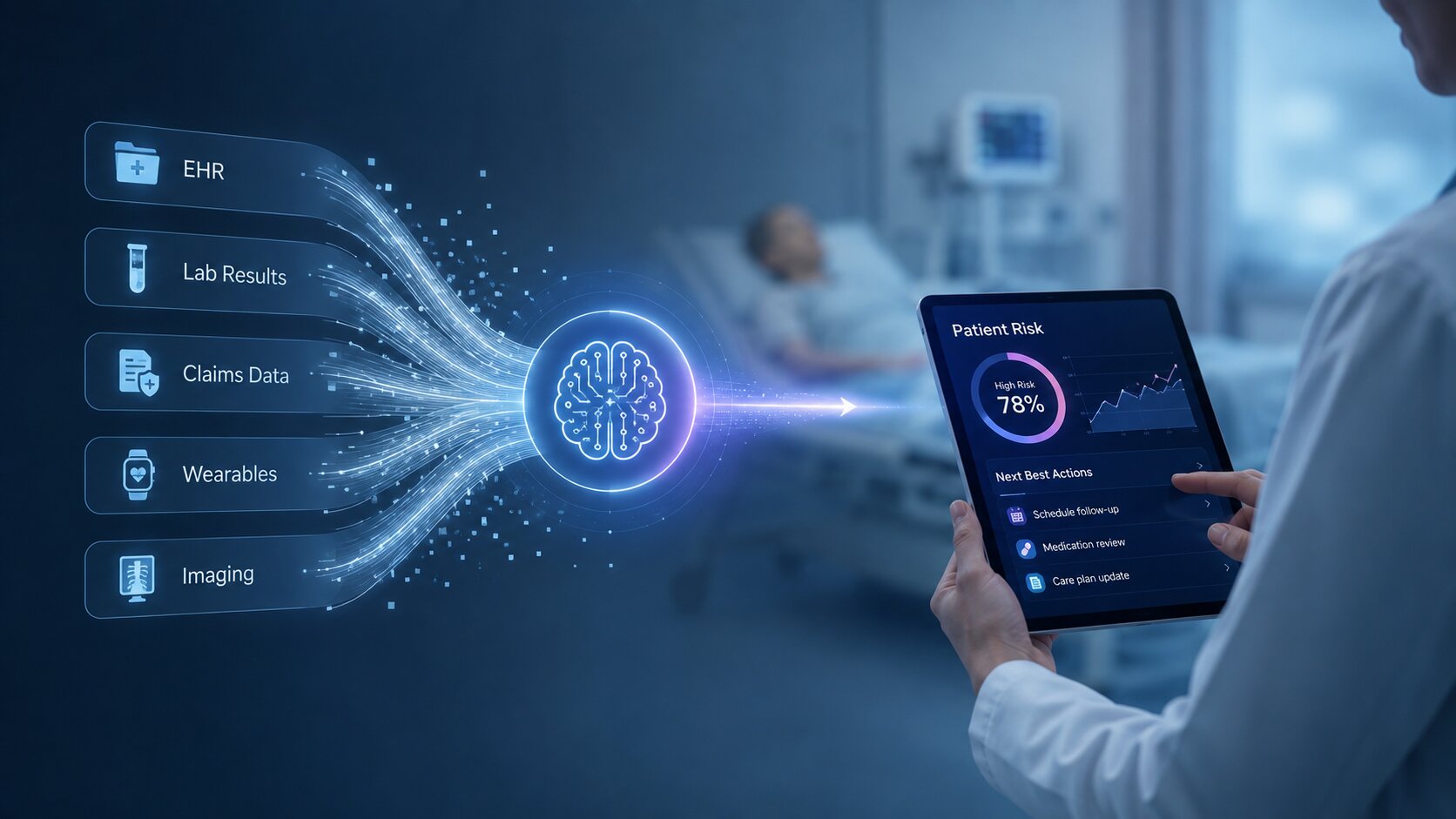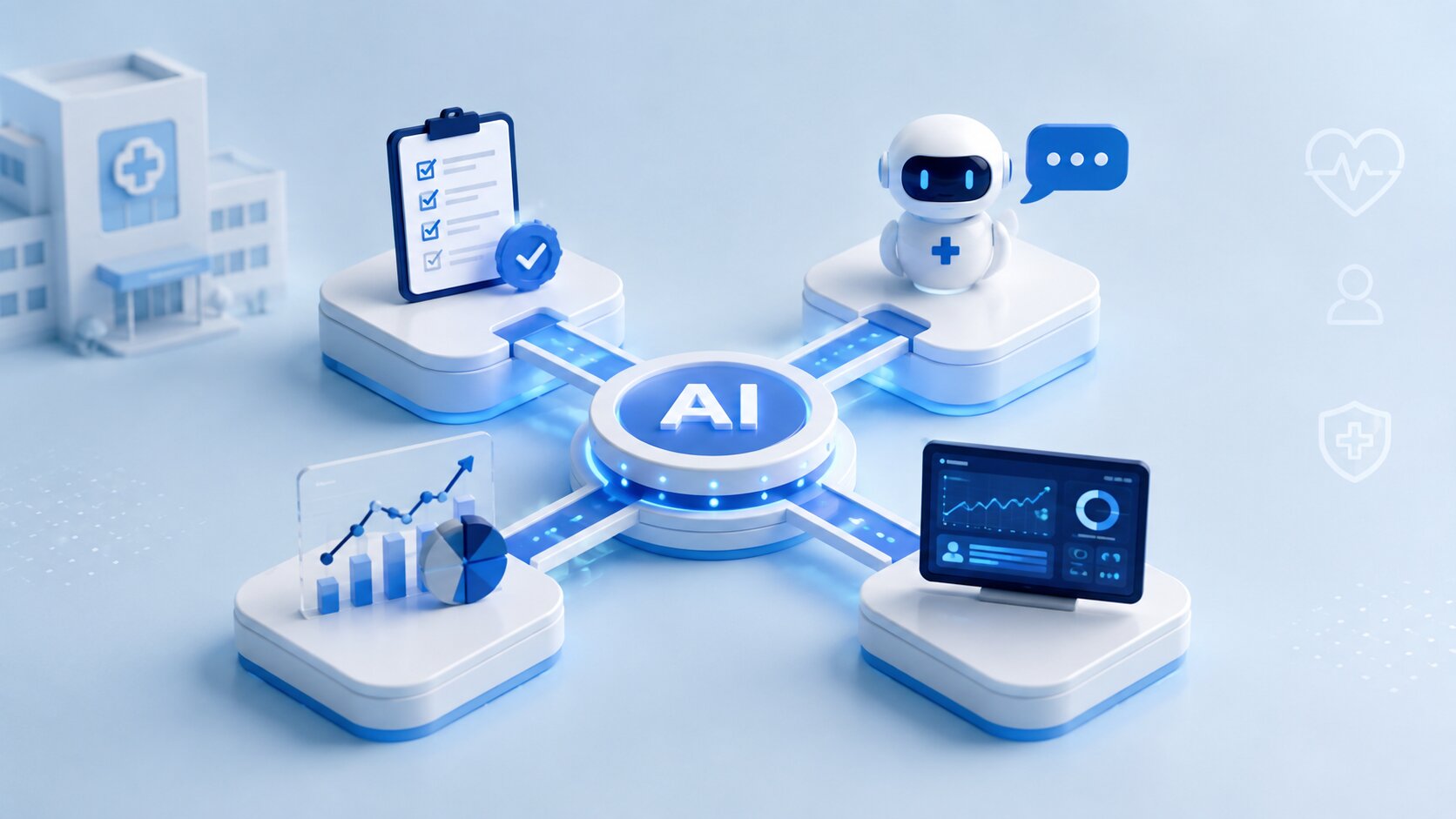
Healthcare SaaS Development: How to Build a Scalable, Compliant, AI-Powered Platform in 2026
Healthcare SaaS in 2026 sits at the intersection of three hard problems: compliance, interoperability, and AI adoption — and getting any one wrong costs months and millions. This guide covers the five pillars of a scalable platform, the regulations to design around from day one, and realistic cost and timeline ranges.

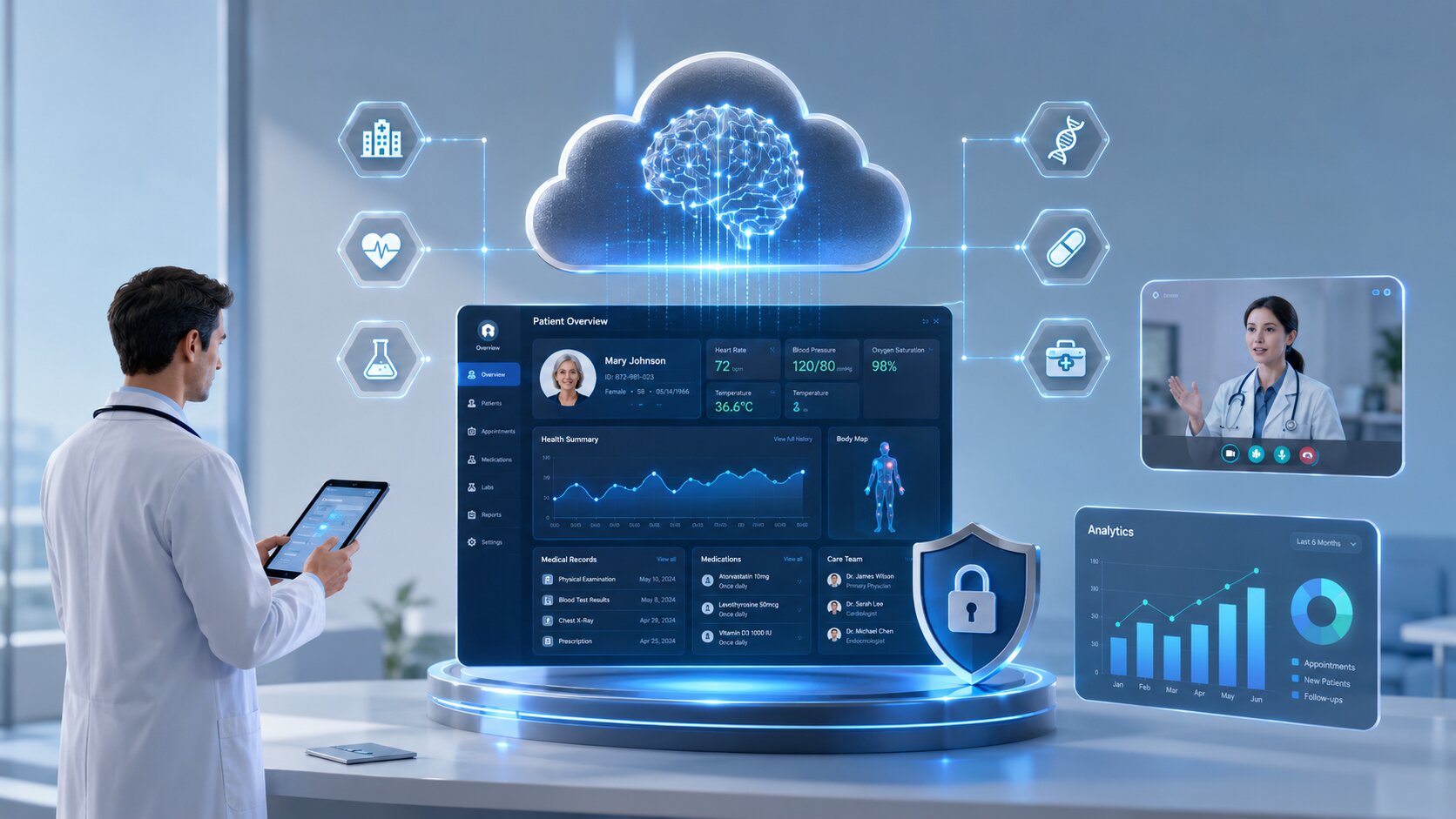
Healthcare leaders no longer ask “should we build a digital health product?” They ask “how do we architect one that scales seamlessly without breaking under strict regulatory mandates, volatile user concurrency, or clinical data complexity?” Healthcare SaaS development in 2026 sits at the intersection of three hard problems: compliance, interoperability, and AI adoption, and getting any one of them wrong costs you months and millions.
According to Mordor Intelligence, the stakes are only rising: the global healthcare SaaS market is worth $37.68 billion in 2026 and is growing at a 16.94% CAGR, expected to reach $82.37 billion by 2031. Building a resilient, compliance-first architecture from day one is the single highest-leverage decision a HealthTech leadership team can make.
This guide breaks down exactly how to plan, build, and launch a scalable, compliant, AI-powered healthcare SaaS platform, and why the way you build it now matters as much as what you build.
Key Takeaways
- Healthcare SaaS development succeeds when compliance (HIPAA, GDPR, ABDM) is designed in from day one, not patched in later.
- AI is no longer a bolt-on feature. It now shapes the healthcare software development lifecycle itself, from requirement-gathering to deployment.
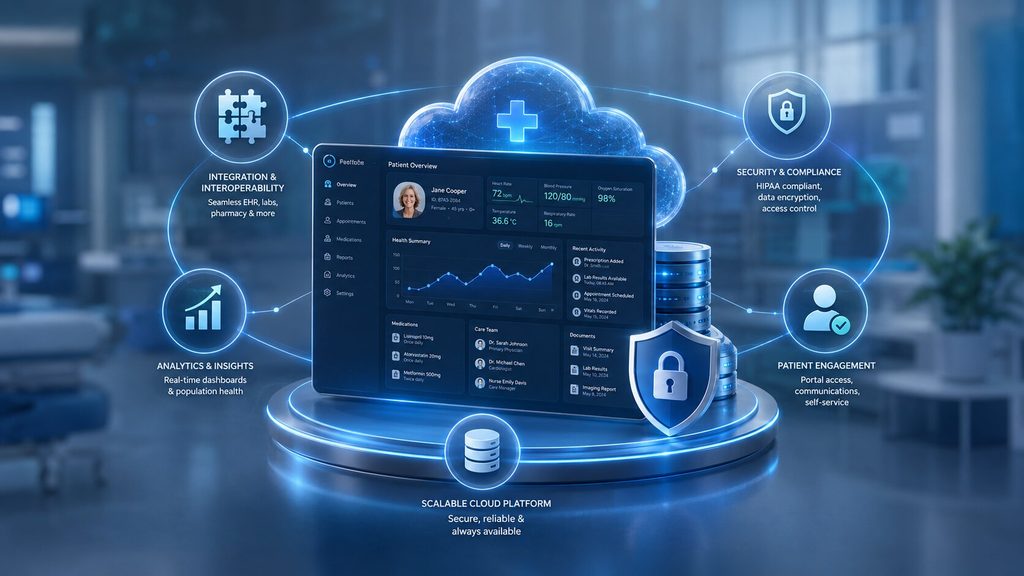
- A modern healthcare SaaS platform needs five pillars: interoperability, security, scalability, AI/agentic intelligence, and human-in-the-loop clinical oversight.
- Telehealth software development timelines typically run 4-9 months depending on scope, and budgets range from $60,000 to $400,000+.
- Choosing the right healthtech software development companies matters more than choosing the right tech stack, and execution discipline decides outcomes.
What Does Healthcare SaaS Development Actually Involve?
Healthcare SaaS development means building a cloud-hosted, subscription-based software platform that healthcare providers, payers, or patients access over the internet instead of installing on local servers.
Think patient portals, telehealth software development platforms, remote monitoring dashboards, or hospital management systems delivered as a service. Advanced platforms also incorporate AI-native clinical decision support via Retrieval-Augmented Generation (RAG) and automated X12 EDI claims clearinghouses.
Unlike a generic SaaS product, healthcare application development carries extra weight. You are handling Protected Health Information (PHI), you must interoperate with existing hospital systems, and a bug in your code can affect patient safety, not just user experience. That’s why custom healthtech software development services look very different from typical web app development. Every architectural decision runs through a compliance and clinical-safety filter first.
Why AI Is Rewriting the Healthcare Software Development Playbook
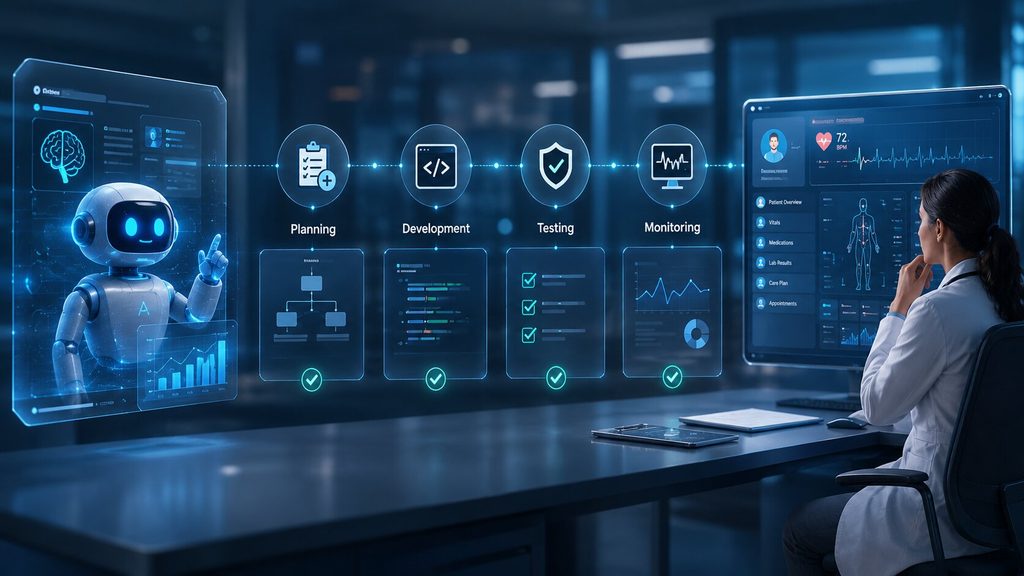
Software engineering itself is changing, and healthcare is feeling it first because the stakes are highest. AWS’s engineering team recently proposed an entirely new way of building software called the AI-Driven Development Lifecycle, in which AI is positioned as a central collaborator that creates detailed work plans, actively seeks clarification, and defers critical decisions to human teams, rather than being treated as a side tool. This is exactly the discipline healthtech software development needs. AI can move fast on code, test generation, and documentation, but a clinician or compliance officer still has to sign off on anything that touches patient data or care logic.
Industry analysis backs this shift. AI is transforming linear software delivery into a continuously optimizing system by introducing intelligence, automation, and feedback at every stage of the development lifecycle, from requirements parsing to deployment to operations. For a healthcare SaaS platform, that means:
- Requirements phase: AI parses clinical workflows and regulatory clauses (HIPAA, ABDM, SOC 2, FHIR R4 specs & HL7) to flag conflicts before a single line of code is written.
- Build phase: AI-assisted coding accelerates FHIR/HL7 integration work and reduces manual API-mapping errors.
- Testing phase: AI generates synthetic, privacy-safe patient data to test edge cases without ever touching real PHI.
- Operations phase: AI-driven monitoring catches anomalies in patient data flows faster than manual audits ever could.
This is the “Agent-first, Human-in-the-loop” approach that separates a platform built to scale from one built to demo. AI drafts, humans decide — especially in digital health software development, where a wrong autonomous decision isn’t just a bug. It’s a liability.
The 5 Pillars of a Scalable, Compliant Healthcare SaaS Platform
Every successful healthtech enterprise software development project rests on five non-negotiable pillars.
| Pillar | What It Means | Why It Matters |
|---|---|---|
| Interoperability | HL7, FHIR, and DICOM support to connect with EHRs, labs, and imaging systems | Hospitals won’t adopt a platform that creates data silos |
| Security & Compliance | HIPAA, GDPR, ABDM, SOC 2 baked into architecture | One breach can end a healthtech brand overnight |
| Scalability | Cloud-native, microservices-based, auto-scaling infrastructure | Patient load spikes unpredictably (flu season, pandemics, campaigns) |
| AI/Agentic Layer | Clinical decision support, triage bots, predictive analytics | Differentiates your platform from legacy competitors |
| Human-in-the-Loop Governance | Clinician review checkpoints on AI-driven suggestions | Keeps AI accountable and clinically safe |
A platform missing even one of these pillars isn’t a healthcare SaaS platform. It’s a liability waiting to surface.
Core Features Every Modern Healthcare SaaS Platform Needs
Whether you’re building a hospital-wide system or a focused telehealth software development product, these features are now table stakes:
- Secure patient portals with granular Role-Based Access Control (RBAC).
- HIPAA-compliant video consultation infrastructure built with WebRTC and bandwidth-adaptive streaming for telehealth software development.
- EHR/EMR integration via FHIR APIs for real time chart updates.
- AI-powered symptom triage to route patients faster and reduce clinician load.
- E-prescription and pharmacy integration (e.g., Surescripts) with immutable audit trails.
- Remote patient monitoring (RPM) dashboards pulling data from wearables and IoT devices.
- Billing and insurance claims automation to reduce administrative overhead.
- Analytics and predictive dashboards for population health management.
- Multi-tenant architecture if you’re selling to multiple hospital groups or clinics.
Each of these needs to be designed for custom healthtech software development, not squeezed out of an off-the-shelf template. Healthcare workflows are too specific for generic SaaS boilerplate to hold up under real clinical use.
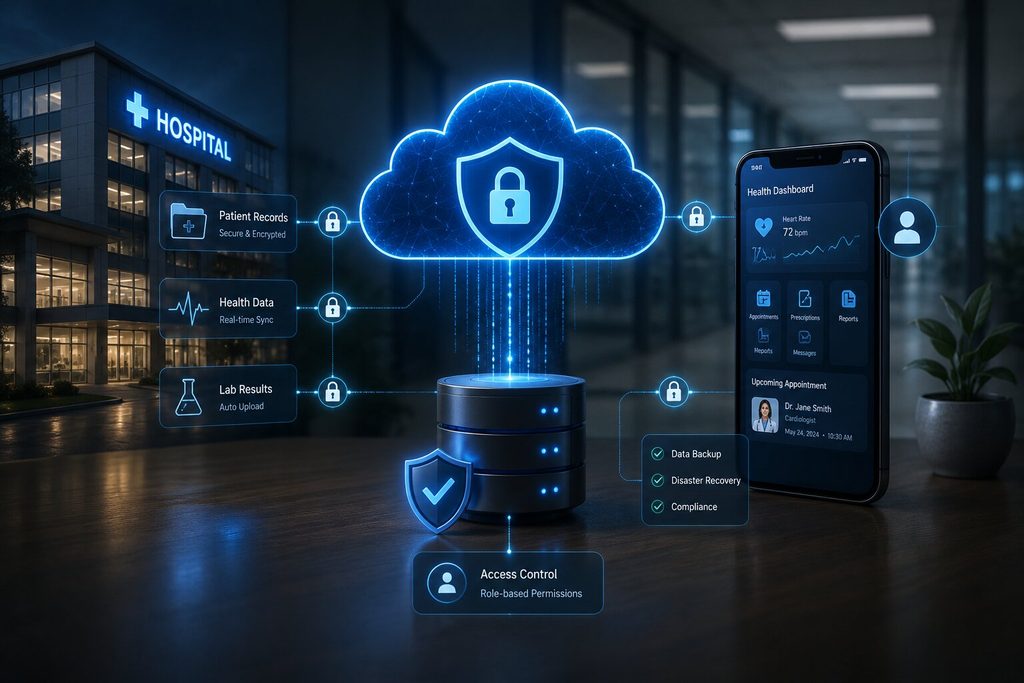
Compliance: The Part You Cannot Outsource to Later
Compliance failures are the single biggest reason healthcare software development projects stall or get shelved after launch. Build these in from architecture stage one:
| Regulation | Region | What It Requires |
|---|---|---|
| HIPAA | United States | PHI encryption, access logs, breach notification protocols |
| GDPR | European Union | Explicit consent, right to erasure, data portability |
| ABDM (Ayushman Bharat Digital Mission) | India | Health ID integration, consent-based data sharing |
| SOC 2 Type II | Global/Enterprise | Security, availability, and confidentiality controls audit |
| HL7/FHIR | Global | Standardized clinical data exchange format |
A genuinely reliable healthcare application development partner treats these not as a checklist at the end, but as design constraints from the first architecture diagram.
Cost & Timeline: What to Actually Budget For
Cost is usually the first question decision-makers ask, so here’s a realistic breakdown for healthtech software development services in 2026:
| Platform Type | Estimated Timeline | Estimated Cost (USD) |
|---|---|---|
| MVP Patient Portal / Booking App | 3-4 months | $40,000 – $80,000 |
| Telehealth Platform (video + EHR integration) | 5-7 months | $90,000 – $180,000 |
| Full Hospital Management SaaS | 8-12 months | $200,000 – $450,000+ |
| AI-Powered RPM + Analytics Suite | 6-9 months | $150,000 – $300,000 |
Costs swing based on the depth of EHR integration, the number of compliance jurisdictions you need to satisfy, and how much AI/agentic functionality you build in versus bolt on later. Building AI-native from day one costs more upfront but saves significant rework, and retrofitting AI into a rigid legacy architecture is almost always more expensive than designing for it initially.
Choosing the Right Development Partner
Here’s what actually separates a healthtech software development company from a bad hire:
- Domain proof, not just tech proof. Ask for healthcare-specific case studies and verified FHIR integration experience, not generic app portfolios.
- Compliance-first engineering culture. They should ask about HIPAA/ABDM before you bring it up.
- AI-DLC maturity. Teams using AI-augmented development cycles ship faster without sacrificing code quality. This is now a genuine differentiator, not a buzzword.
- Post-launch ownership. Healthcare platforms need continuous monitoring, patching, and audit support long after go-live.
- Engineering depth over headcount. Ahmedabad’s software engineering ecosystem has quietly become a serious hub for this kind of disciplined, compliance-aware, AI-augmented development — worth evaluating alongside the usual metro-city names.
Final Thoughts
Building a healthcare SaaS platform in 2026 isn’t about picking the flashiest AI feature. It’s about combining compliant architecture, real interoperability, and a development process where AI accelerates the team without replacing clinical and regulatory judgment. Get the foundation — compliance, interoperability, and security — right first, layer AI-driven intelligence on top with human oversight built in, and you have a platform that scales with trust intact.
If you’re scoping a custom healthtech software development services project and want a realistic cost and timeline estimate based on your specific use case, that conversation is worth having before you write a single requirement document.
At VectovateAI, we engineer custom, AI-Native healthcare software platforms built for enterprise scale, strict compliance, and flawless interoperability. See how that plays out in our healthcare app modernization case study, where automated scheduling lifted clinical efficiency by 35%.
Frequently Asked Questions.
Get all your answers here and if something remains ask our AI concierge or Book a call with our consultant.