eCommerce Platform Development in the AI Era: An Architecture Guide for Retail Tech Leaders
Retail buyers stopped comparing “custom vs template” — they compare speed, personalization, and total cost of ownership. This architecture guide breaks down the six layers of an AI-ready commerce platform, what headless actually buys you, 2026 budget ranges, and the governance layer most teams skip.

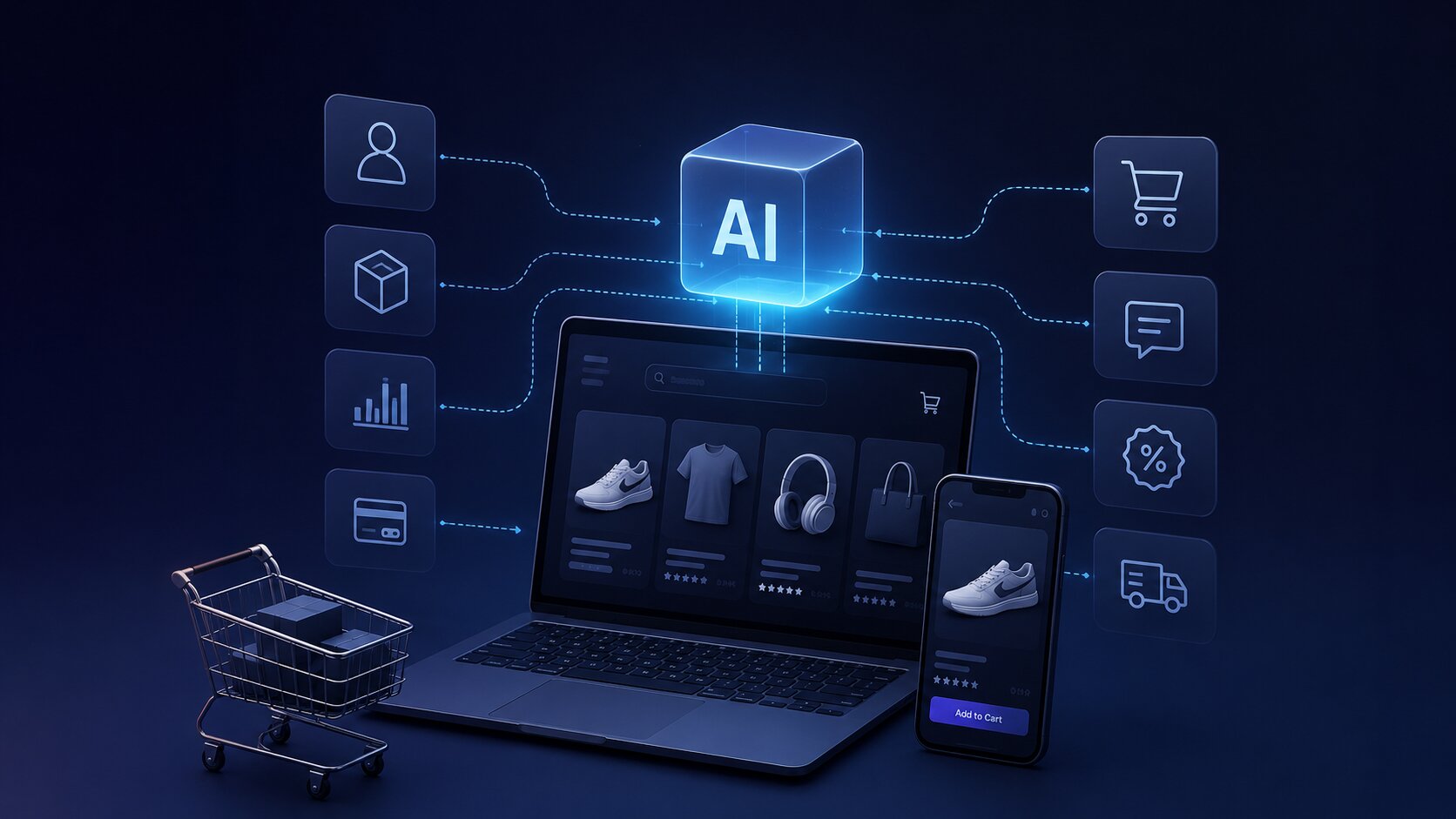
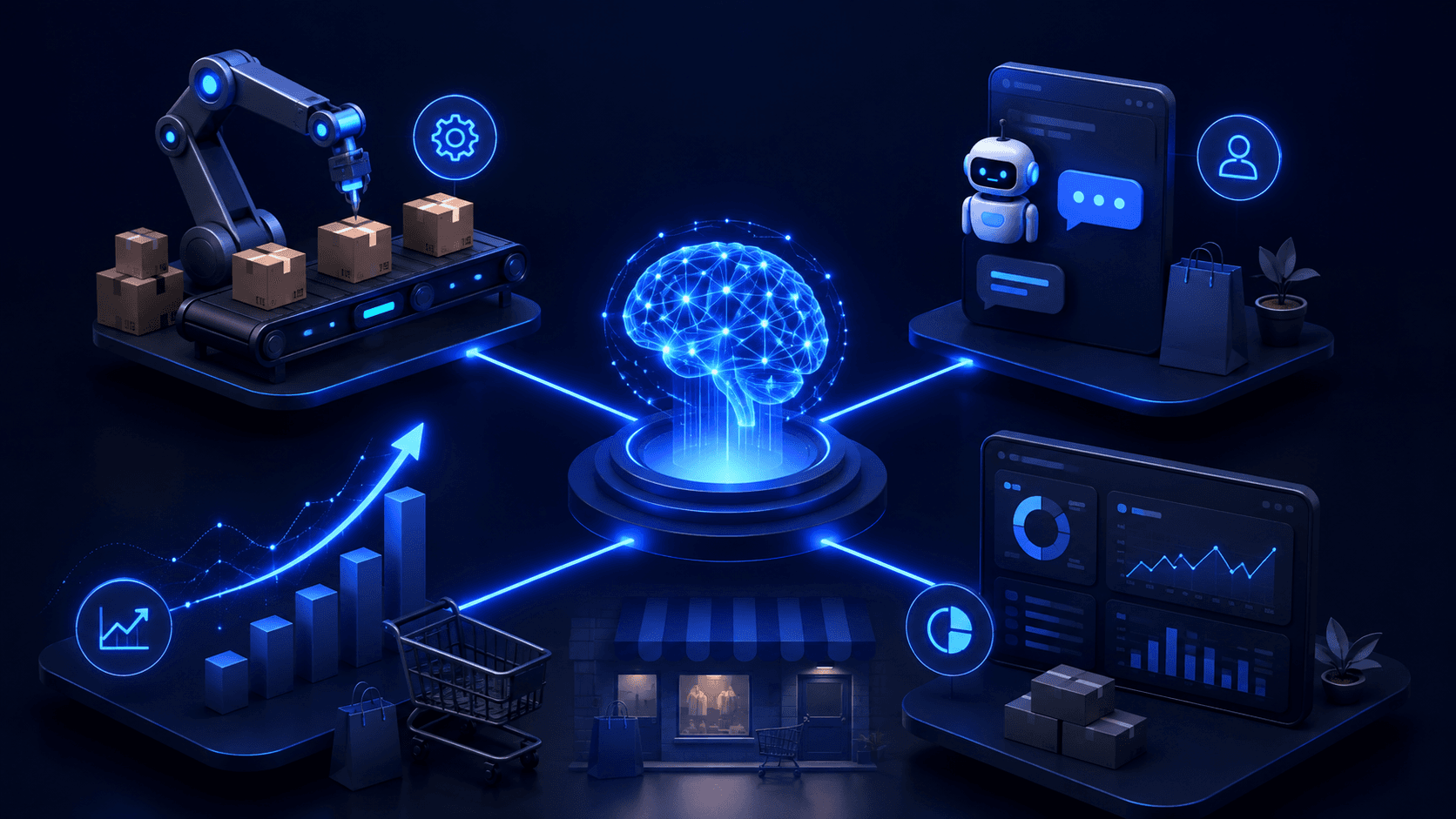
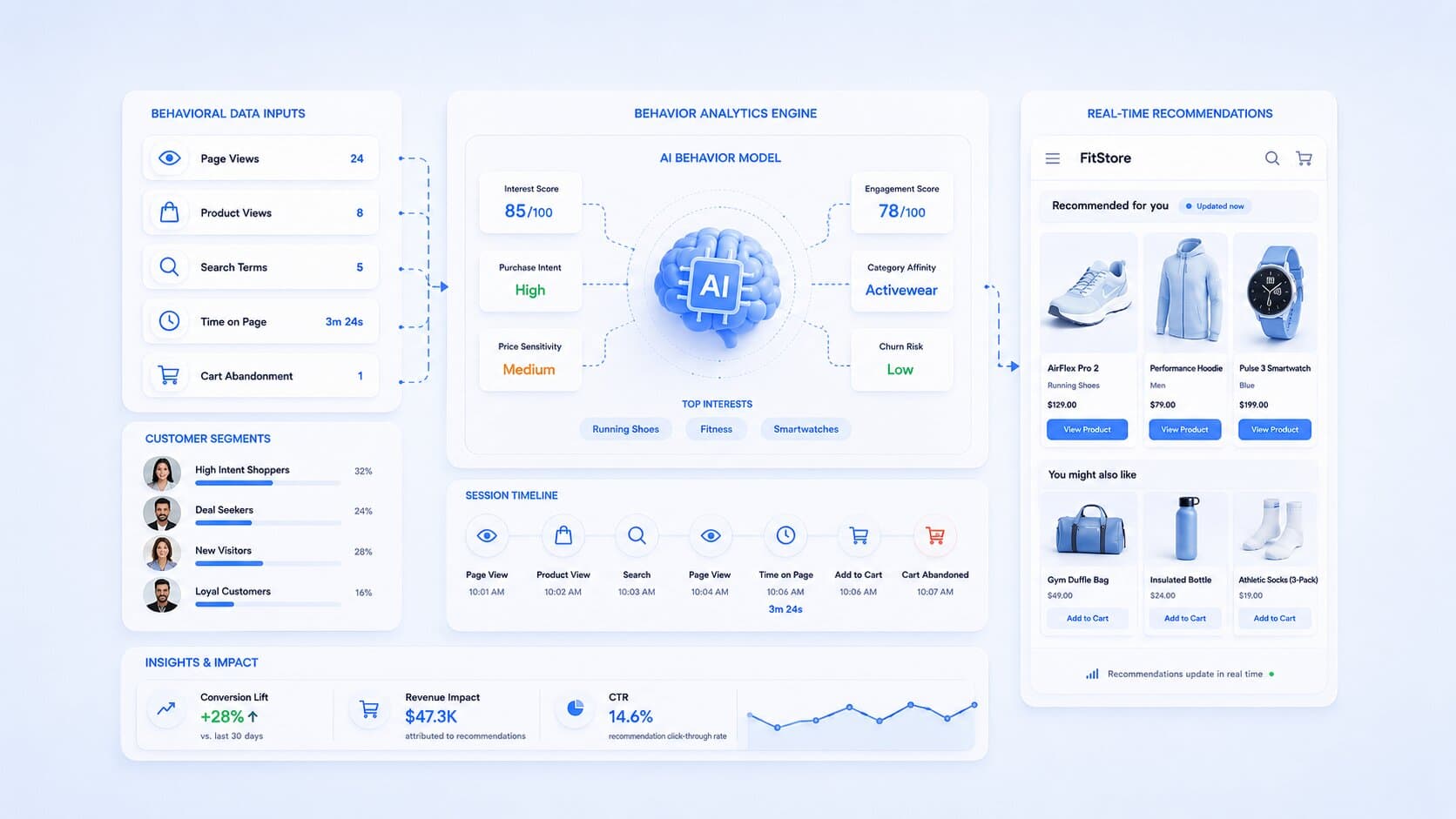
eCommerce platform development has moved past the “pick a platform and launch” era. AI now sits inside the architecture itself, shaping how inventory, search, pricing, and customer experience work together in real time.
Online retail crossed $5.4 trillion in 2025 and is on track to touch nearly $6.8 trillion in 2026, driven largely by teams that treat platform-building as an engineering problem, not a template-picking exercise, as per a Statista report.
Generative AI is now the engine behind how production commerce software gets written, tested, and shipped, cutting launch timelines from four to six months down to six to twelve weeks, without cutting corners on scale or security.
Buyers no longer compare “custom vs template.” They compare speed, personalization, and total cost of ownership. If your development partner is still writing every module by hand, you are already behind.
This guide breaks down what a modern, AI-ready commerce architecture actually looks like, and how retail leaders can plan eCommerce platform development projects that scale without collapsing under their own complexity.
Key Takeaways
- Traditional, batch-processing commerce architecture cannot support real-time personalization or AI-driven demand spikes.
- eCommerce software development in 2026 leans heavily on modular, composable systems rather than monolithic builds.
- Headless and API-first architecture is now the default starting point for any serious retail platform.
- AI features can raise development budgets by 20 to 50 percent, but they also unlock measurable gains in conversion and retention.
- B2B and enterprise buyers need governance, auditability, and human-in-the-loop controls, not just automation for its own sake.
Why Traditional Architectures Struggle in the AI Era
Most legacy commerce systems were built for predictable traffic and static personalization. They rely on batch jobs. Data gets collected, stored, and processed later, often overnight.
That model breaks the moment real-time demand hits. A flash sale, a viral product, or a festive-season spike overwhelms a batch-based system. Pages slow down. Checkout lags. Shoppers abandon carts before they even reach payment. This pattern of slow response, stale personalization, and delayed decision-making leads directly to revenue leakage.
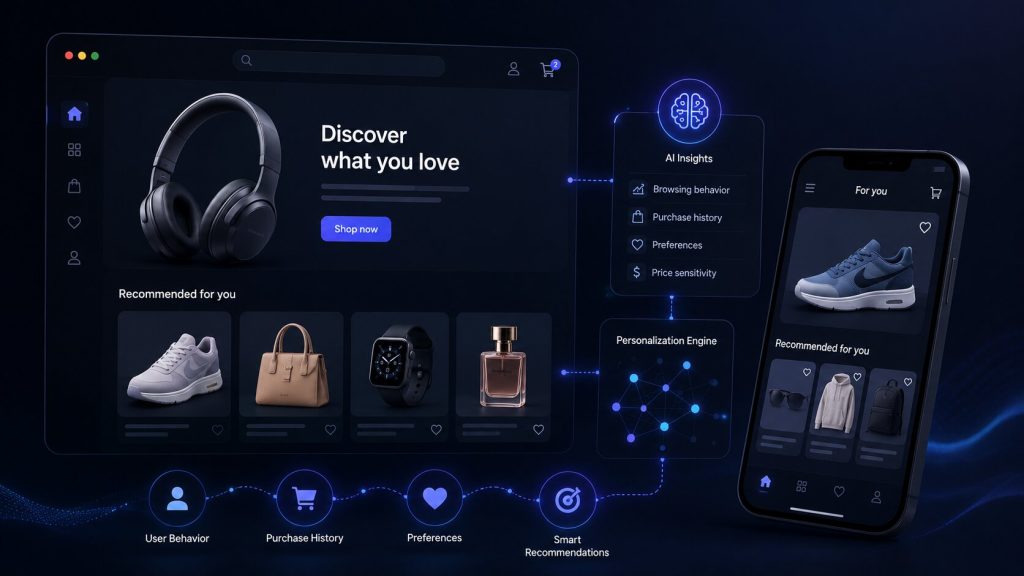
An AI-first architecture flips this. Data streams continuously instead of arriving in nightly batches. The system scales resources the moment demand spikes, similar to a thermostat reacting instantly to temperature change. Automation layers handle routine tasks like catalog updates, freeing engineering teams to focus on strategy instead of firefighting.
What Modern eCommerce software development Looks Like
eCommerce software development today rarely means writing every module from scratch. Retail tech leaders combine platforms, APIs, and AI services into a composable stack. This shift changes both cost and speed of delivery.
Three forces are driving this change:
- AI-assisted coding and testing. Development teams using AI coding assistants report meaningful gains in output and fewer review cycles, which shortens delivery timelines for eCommerce development projects.
- Modular, composable commerce. Instead of one monolithic build, teams stitch together commerce platforms, payment gateways, shipping APIs, analytics tools, and AI recommendation engines.
- Plugin and app ecosystems. Features like AI chatbots, dynamic pricing, and advanced search no longer require custom code from day one.
This is why custom ecommerce software development today looks more like systems integration than pure engineering. A strong ecommerce software development company spends as much time on architecture decisions as it does on writing code.
Core Architecture Layers for AI-Ready Platforms
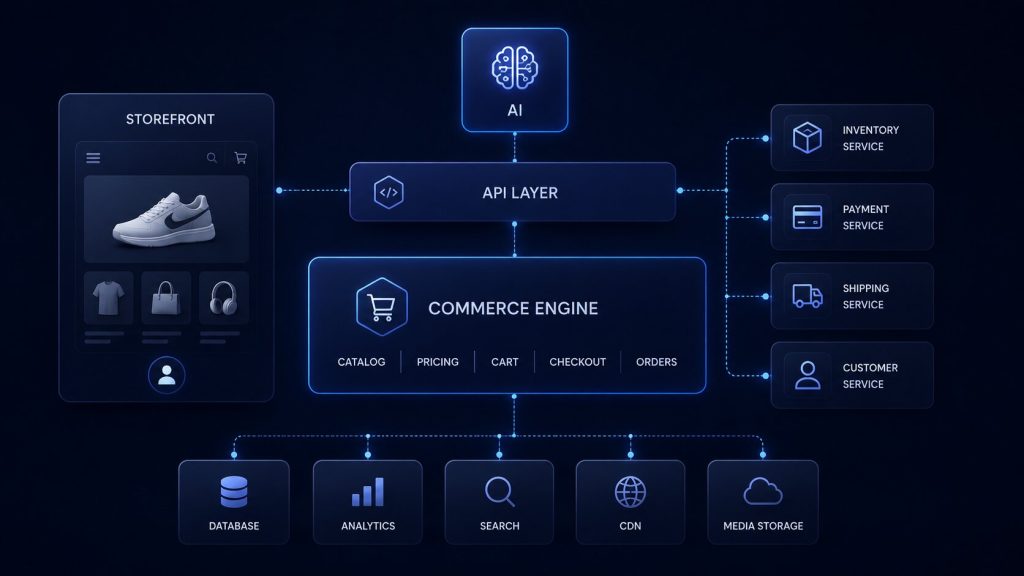
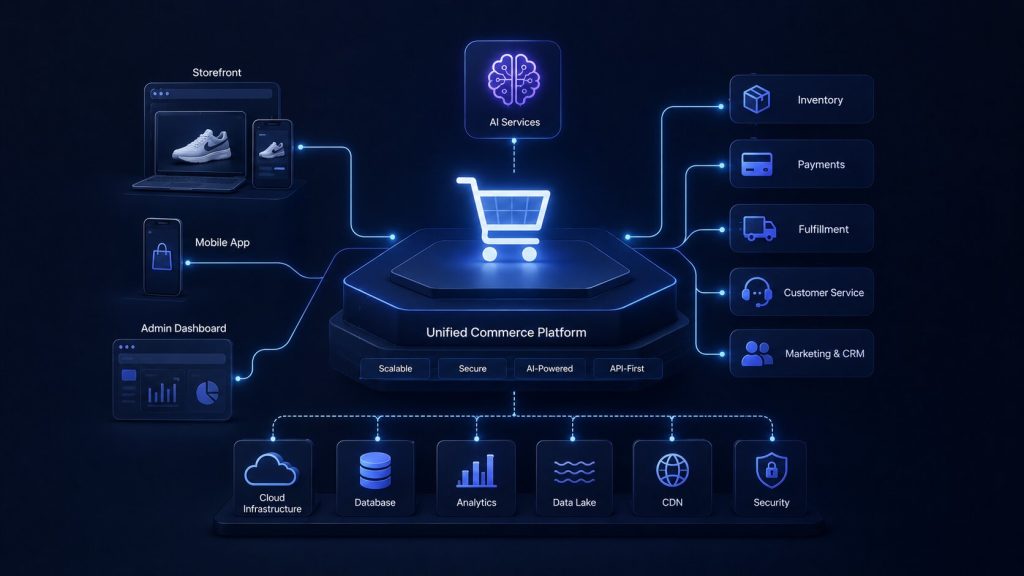
A well-planned eCommerce platform development project is built in layers. Each layer has a distinct job, and each one needs to talk to the AI layer sitting alongside it.
| Layer | What It Handles | AI’s Role |
|---|---|---|
| Storefront / Experience | UI, product discovery, checkout flow | Personalized layouts, dynamic search, visual and voice search |
| Commerce Engine | Cart, pricing, orders, promotions | Dynamic pricing, real-time inventory logic |
| Data & Event Layer | Behavioral, transactional, inventory data | Streaming data for real-time decisions |
| AI/ML Services | Recommendations, forecasting, fraud detection | Core intelligence layer |
| Integration Layer | ERP, CRM, payment, logistics APIs | Connects AI insights to operations |
| Governance Layer | Access control, audit logs, compliance | Human-in-the-loop review, model oversight |
This layered approach matters because AI-driven eCommerce software solution development is only as good as the data feeding it. If the data and event layer is weak, personalization and forecasting both suffer, no matter how advanced the AI model is.
Headless Commerce Development: The Backbone of AI-Ready Retail
Headless commerce development separates the frontend experience from the backend commerce logic. This is not a trend anymore. It is close to a baseline requirement for any platform planning serious AI integration.
According to Gartner, organizations that adopt a modular, composable, and headless commerce approach outpace the competition by up to 60% in the speed of implementing new digital features.
Why it matters for AI-first retail:
- Teams can update the storefront without touching backend logic, enabling faster experimentation with AI-driven layouts.
- APIs expose data cleanly to AI services, making real-time personalization and recommendation engines far easier to plug in.
- Multiple frontends, web, mobile, kiosk, voice, can pull from the same backend, keeping experiences consistent across channels.
This kind of hybrid continuity, where online and offline experiences share the same customer profile and real-time data, is becoming standard practice for platforms competing on personalization at scale.
Software development for ecommerce that ignores this shift risks locking retailers into rigid, hard-to-update platforms right when shopper expectations move fastest.
B2B eCommerce Software Development: Unique Architecture Needs
B2B eCommerce software development carries different demands than B2C. Buyers expect custom pricing, approval workflows, bulk ordering, and deep ERP integration. AI adds another layer of complexity here, since B2B decisions often involve multiple stakeholders and longer sales cycles.
Key architecture considerations for retail & eCommerce software development in B2B contexts:
- Custom pricing logic tied to contracts, volume tiers, and account history.
- ERP and CRM integration so AI forecasting reflects real procurement patterns, not just web traffic.
- Role-based access and approval chains, since B2B purchases often need sign-off from more than one person.
- Predictive reordering, where AI agents flag or even initiate low-risk repeat purchases with clear user controls.
Getting this right requires eCommerce software developer teams that understand procurement workflows, not just storefront UX.
In-House vs Outsourced eCommerce software development services
One of the earliest decisions retail tech leaders face is whether to build with an internal team or partner with an external eCommerce software development company. Each path carries trade-offs that go beyond simple cost comparison.
| Factor | In-House Team | Outsourced Partner |
|---|---|---|
| Speed to launch: | Slower, hiring takes time | Faster, team is already in place |
| Domain expertise: | Deep product knowledge | Broad experience across industries |
| Long-term cost: | Higher fixed cost | Lower upfront, variable cost |
| Technical debt risk: | Lower if team is stable | Higher if governance is weak |
| Scalability: | Limited by headcount | Easier to scale up or down |
The real risk in outsourcing is not cost. It is what some technical leaders call the “maintenance iceberg,” the hidden cost of poorly documented code, unclear ownership, and weak governance surfacing months after launch. Retail leaders evaluating a development eCommerce software partner should ask direct questions about documentation standards, code ownership, and governance-as-code practices before signing a contract.
Cost Snapshot: What eCommerce Platform Development Costs in 2026
Budget planning for eCommerce website development software projects depends heavily on scope, integrations, and how much AI capability is built in. Here is a general breakdown based on current market patterns.
| Project Scope | Typical Budget | Timeline |
|---|---|---|
| Starter store | $3,000 – $10,000 | 2 – 4 weeks |
| Growth-stage platform | $10,000 – $50,000 | 4 – 8 weeks |
| Advanced commerce platform | $50,000 – $120,000 | 8 – 12 weeks |
| Enterprise / B2B platform | $120,000+ | 12 – 20 weeks |
AI-specific features add their own cost layer:
- Product recommendation engine: $8,000 – $40,000
- Dynamic pricing system: $25,000 – $60,000
- AI search and personalization: $5,000 – $20,000
These figures reflect broader industry benchmarks for eCommerce software solutions development and can shift based on region, team structure, and platform choice.
Governance, Data & AI Guardrails: The Missing Layer
Most conversations about AI in commerce focus on what AI can do. Few focus on how to keep it accountable. This gap becomes expensive fast, especially for B2B and enterprise retailers where a wrong AI-driven price change or a bad recommendation can damage trust at scale.
A strong governance layer includes:
- Human-in-the-loop checkpoints for high-stakes decisions like pricing changes or large B2B orders.
- Audit trails that log why an AI system made a specific recommendation or pricing call.
- Clear escalation paths when AI confidence is low, or data looks unusual.
This is where retail-eCommerce software development needs to shift its default posture. Full automation sounds efficient, but retailers that keep a human checkpoint on high-impact decisions tend to catch errors before they become costly.
Conclusion:
Retail leaders who treat eCommerce platform development as an ongoing architecture discipline, not a one-time build, are the ones positioned to compete in 2026 and beyond. The technology choices matter, but the governance and data discipline around them matter just as much.
Building AI-Native Commerce Architectures with VectovateAI
At VectovateAI, we engineering-first architects help enterprise and growth-stage brands build modular, scalable, and secure e-commerce systems. Operating from our hub in Ahmedabad, India, our team combines agentic velocity with strict Human-in-the-Loop governance—ensuring your retail software ships up to 2x faster without sacrificing code quality, security, or enterprise compliance.
For a worked example of this architecture, read how we scaled conversion rates by 40% for a fashion retailer on a full-stack AI build, and why bolted-on AI fails on platforms that skip the governance layer.
Ready to Modernize Your E-Commerce Architecture?
Whether you are migrating away from a legacy monolith or constructing a headless, multi-channel commerce stack from the ground up, our lead systems architects are ready to assist.
Schedule a free architecture & security review with VectovateAI
Frequently Asked Questions.
Get all your answers here and if something remains ask our AI concierge or Book a call with our consultant.