AI-Native Software Development: Why Bolted-On AI Fails and What Building AI-First Actually Looks Like
Every vendor claims “AI-powered” — most of it is duct-taped onto systems built for a different era. The removal test settles it: take the AI away, and if the product still works, it was never AI-native. Here is what a real AI-first build looks like, and what to ask before you hire one.

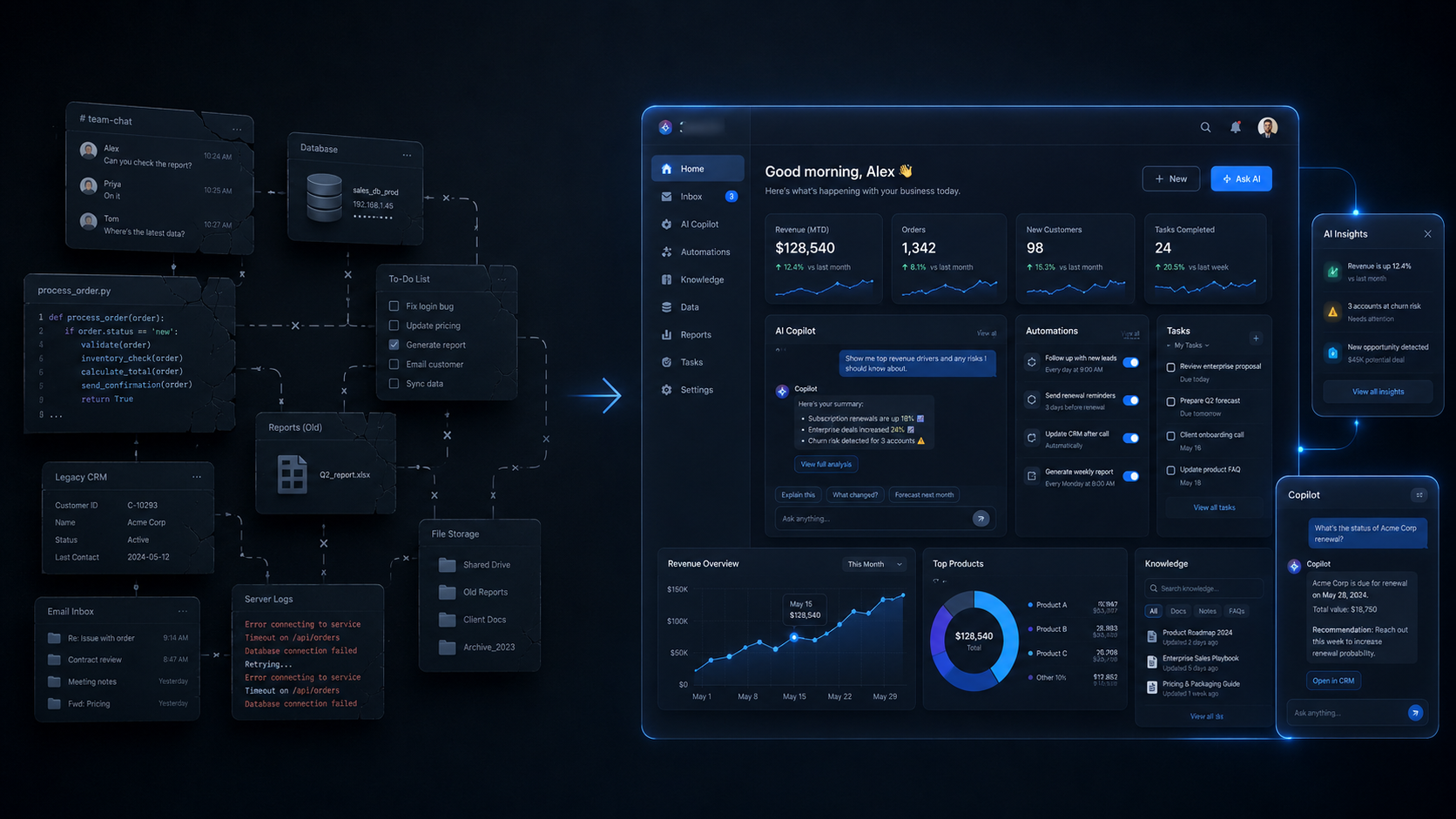
Every software vendor claims “AI-powered” today. But most of that AI is duct-taped onto systems built for a different era.
AI-native software development flips that model putting AI at the core of the architecture. This guide breaks down what that actually means, why bolted-on AI keeps failing, and what a real AI-first build looks like in 2026.
Key Takeaways
- AI-native software development puts AI in the core architecture, not on top of it. The removal test settles the question: take AI away, and if the product breaks, it was AI-native.
- Bolted-on AI inherits every weakness of the legacy system underneath it, including data rigidity, per-seat pricing conflicts, and clunky UX.
- Gartner projects 40% of agentic AI projects will fail by 2027, mostly from automating broken processes instead of rebuilding around AI-native principles.
- Real AI-native platforms track rich, multi-attribute data foundations and adapt continuously, not reactively.
- The right build order is: define the task, design the data model, choose the AI integration pattern, then build the interface last.
- Human-in-the-loop review stays essential for high-stakes decisions, even in a fully agent-first system.
What Is AI Native Development?
In simple terms, it means designing a product’s data, workflows, and interface around AI from day one, instead of adding a chatbot to an existing system.
Bolted-on AI sits on top of legacy architecture, it reads data, suggests actions, and stops there. AI-native development instead makes the model part of the core, structures data so the model can reason over it, and assumes intelligence is available at every step of the workflow.
AI-Native vs Traditional Enterprise Development Tools
This is where AI native app building platforms vs traditional enterprise development tools really diverge.
A useful benchmark test involves removing all AI features from a product; if it still functions as a viable tool, the AI was added on, and if it collapses, the product is AI-native.
| Approach | Data Model | AI’s Role | What Breaks Without AI |
|---|---|---|---|
| Bolted-on AI | Built for humans, AI reads it later | Suggests, summarizes, chats | Nothing. Core product still runs |
| AI-native development | Built for AI agents to act on | Core execution engine | The entire product |
In a bolt-on platform, the core execution engine still runs on scripts, not intent, so tests behave exactly as the scripts define them, and while the AI module may suggest fixes, the underlying rigid structure stays unchanged. That’s the trap. AI patched onto an old foundation inherits every weakness of that foundation.
Why Bolted-On AI Fails: The Three Structural Traps
AI native development platforms solve three problems that bolt-on tools structurally cannot fix:
- Data model rigidity. Legacy databases expect humans to enter data slowly and carefully. AI agents generate and act on data at machine speed. Forcing that into an old schema breaks reports, integrations, and workflows built on top of it.
- Pricing model conflict. Per-seat pricing assumes humans are the primary users. When AI agents handle work that used to need five people, that revenue model collapses on its own.
- UX design conflict. Old interfaces are built around menus and forms. AI-native interfaces accept natural language and let agents act. Bolting one onto the other creates a clumsy hybrid that satisfies neither.
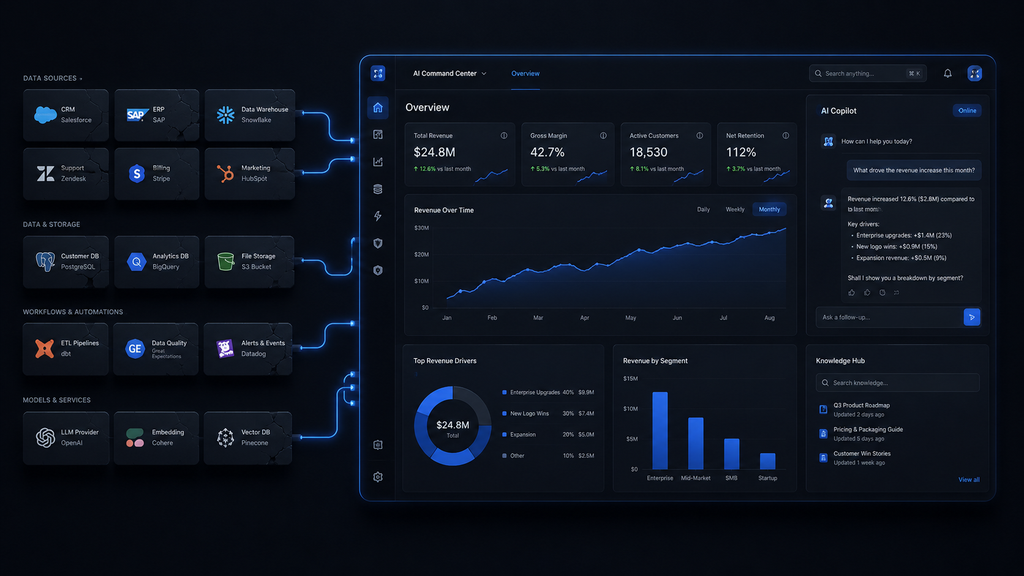
The 2025 DORA Report, based on nearly 5,000 technology professionals globally, found that AI does not fix a team, it amplifies whatever is already there. That single line explains why so many “AI transformation” projects on old platforms quietly fail. You cannot automate your way out of a broken foundation.
Gartner AI-Native Development Platforms 2026: What the Data Says
The numbers back this up clearly. Here’s what the research firms are projecting for AI-native development platforms trends 2026:
| Source | Finding |
|---|---|
| Gartner | 40% of enterprise apps will feature task-specific AI agents by end of 2026, up from under 5% in 2025 |
| Gartner | 80% of organizations will evolve large dev teams into smaller, AI-augmented teams by 2030 |
| Gartner | 40% of agentic AI projects will fail by 2027, largely because teams automate broken processes instead of redesigning around AI-native principles |
| Deloitte | 78% of tech leaders anticipate broad AI agent integration into their architecture within the next five years |
That Gartner failure statistic matters more than the growth ones. It tells you the risk isn’t underusing AI. The risk is bolting AI onto broken processes and calling it transformation.
Key Features of AI-Native Software Development Platforms
If you’re evaluating AI native development firms, here’s what to actually look for. These are the key features of ai-native software development platforms 2025 2026 that separate real AI-native builds from marketing:
- Intent-driven design: You describe the outcome. The system determines the steps, instead of forcing you to script every action manually.
- Multi-attribute data foundations: Instead of tracking a single data point per element, resilient architectures track hundreds of attributes per element, so no single change breaks the system.
- Continuous adaptation, not reactive patching: real self-healing monitors how the application changes and updates the model automatically before failures accumulate, rather than alerting a human after something breaks.
- Human-in-the-loop governance: AI acts, but a person reviews high-stakes decisions before they go live.
- Agent-first workflows: Routine, repeatable work runs through AI agents. People supervise outcomes instead of performing every step by hand.
What an AI-Native Developer Actually Does Differently
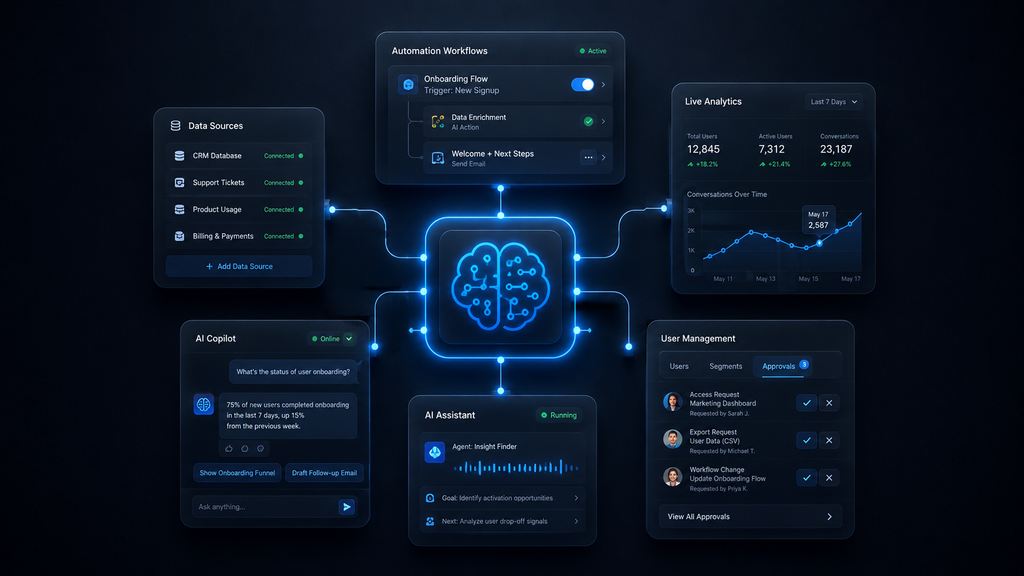
An AI native developer doesn’t start with wireframes. They start by defining the decision or task the AI will own, then design the data model around that task first. Only after that comes the interface. This order matters. Build the screen first, and you’ll end up retrofitting AI later, which is exactly the bolt-on trap this whole guide is about.
Developer-first AI-native companies treat the model choice and AI integration pattern as a foundational decision, not an afterthought bolted on before launch. They keep a human review step for anything high-stakes, whether that’s a financial transaction, a healthcare workflow, or a customer-facing action. AI moves fast. Judgment still needs a person in the loop.
Who’s Actually Behind These Builds?
If you look closely at AI deployment manager profiles at developer-first AI-native companies, a pattern shows up fast. They’re people who sit between the agent and the business outcome, decide what the agent is allowed to touch, and own the rollback plan before anything goes live.
That’s the real difference between a company that talks about being AI-native and one that actually is. Developer-first AI-native companies don’t treat deployment as an afterthought handled by whoever’s free that week. They build it into the role from day one, the same way they build AI into the architecture from day one.
What Building AI-First Actually Looks Like: A Practical Example
Picture two ways to build the same thing: an internal client portal with status tracking and a support assistant.
The bolted-on route:
Build database tables, design pages by hand, wire up a chatbot widget at the end. The chatbot can summarize what’s already there. It cannot restructure the workflow, act on data, or run anything autonomously.
The AI-native route:
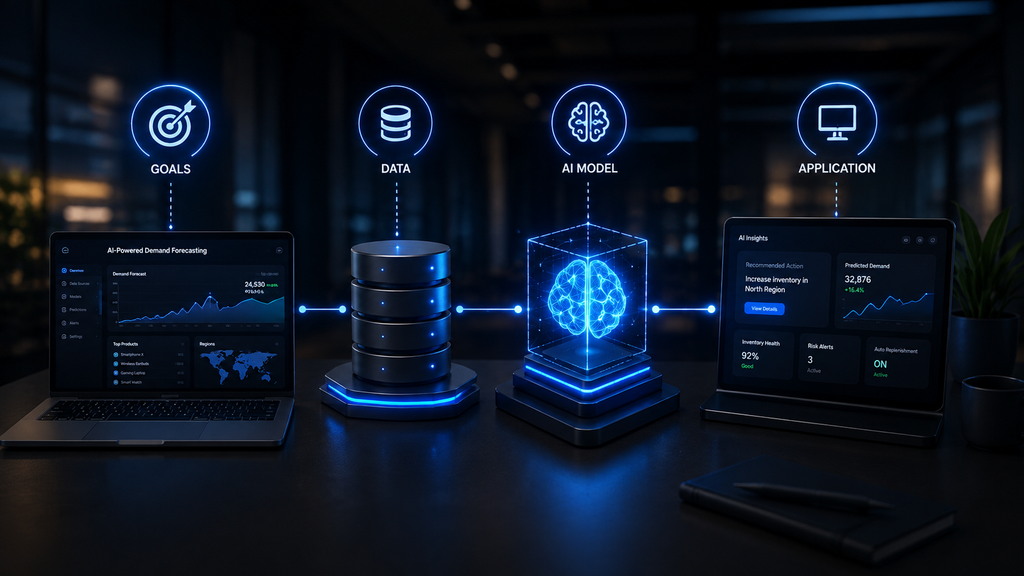
Design the task first (client wants project status without asking a human). Build the data model so an agent can query it directly. Deploy the agent with real context and a clear boundary on what it can do without approval. The interface comes last, shaped around what the agent needs to work well.
The difference isn’t speed alone. It’s capability. One produces a page with a chatbot stapled to it. The other produces a system where intelligence is load-bearing.
Best AI Native Software Development Firms: What to Ask Before You Hire
If you’re comparing best AI-native software development firms, skip the marketing deck and ask these directly:
- Where does AI live in your architecture? Is it the execution engine, or a layer sitting on top of an older script-based system?
- Can your platform work from a plain description of the outcome, without a developer writing every step first?
- What happens when the underlying application changes? Does the system adapt on its own, or does someone get an alert to fix it manually?
- Show a live build, not a recorded demo.
Any firm that answers vaguely, or leans on phrases like “AI-enhanced,” is likely bolting AI onto an older system. That’s not automatically wrong for every project. But it’s not AI-native, and you should know which one you’re paying for.
Our Take: Agent-First, Human-in-the-Loop, Built at VectovateAI
Most AI-native conversations happen at the platform level: pricing tiers, SaaS dashboards, no-code app builders. We come at this from a different angle. As an Ahmedabad-based software engineering team, our focus is agent-first custom development, where AI agents handle the repeatable work and a human always reviews the outcomes that matter.
That combination, agent-first execution paired with human-in-the-loop governance, is what separates AI-native systems that actually hold up in production from demos that look good in a pitch meeting. We build the data layer and the agent layer together, from the first sprint, not as a phase-two upgrade.
That approach is documented in our AI-native architecture case study, where a global travel aggregator scaled to 80% efficiency. For the delivery side, see how AI-powered web development ships production software 2x faster.
Planning an AI-first build or replacing a bolted-on layer? Book a Free AI Architecture Review with VectovateAI
Frequently Asked Questions.
Get all your answers here and if something remains ask our AI concierge or Book a call with our consultant.