AI in Travel & Hospitality: Hyper-Personalized Experiences
Hotels and airlines have stopped guessing what guests want. Here is how AI in travel builds a different experience for every traveler, and where agentic AI takes it next.

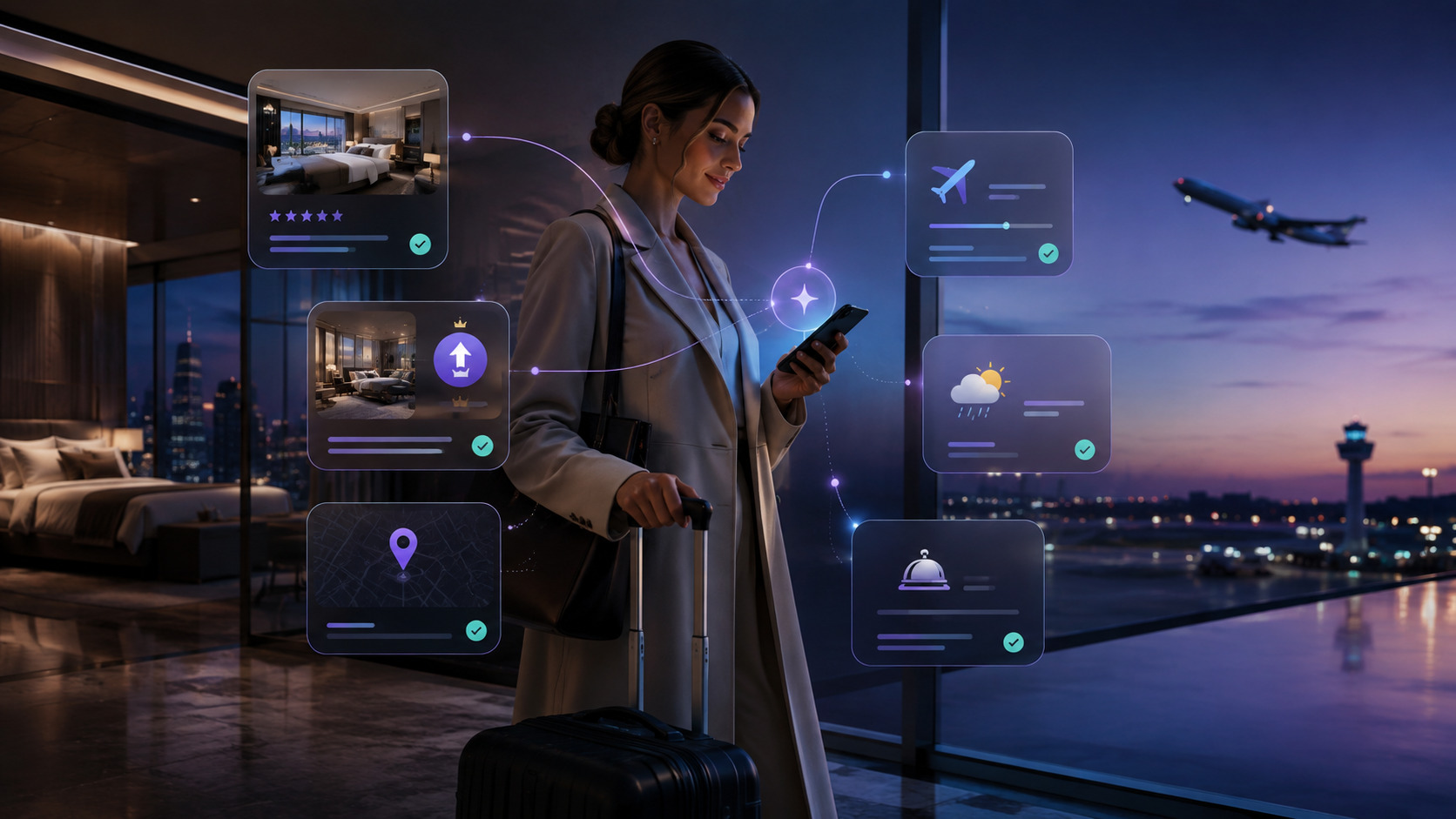
AI in travel just walked out of the back office and into the driver’s seat. It now decides which room a guest sees first, which flight gets rebooked the moment a delay hits, and which local experience pops up on a traveler’s app before they’ve even thought to search for it. No human clicked “send” on any of that.
Hotels, airlines, and OTAs across India, the UAE, and global markets have quietly stopped guessing what “business travelers” or “families” want as a group. Across the AI in travel industry, they’re now building a different experience for every single guest, in real time. That shift isn’t a minor upgrade. It’s rewriting what travelers expect the moment they land on your app, your site, or your front desk.
This blog explains how AI in hospitality creates a highly personalized experience for every guest. You will discover which AI tools actually increase profits instead of just sounding impressive and what steps your business must take before launching automated AI systems across your entire network.
Key Takeaways
- AI in travel and tourism now predicts individual guest needs instead of just grouping travelers into broad personas.
- A McKinsey survey found 84% of travelers who use AI say it improves their experience, and sites reached through GenAI sources see bounce rates fall by up to 45%.
- Conversational AI in hospitality now handles bookings, refunds, and itinerary changes without human agents stepping in.
- IDC projects that AI agents could handle up to 30% of travel bookings by 2030.
- Generative AI in travel works as an advisor, and agentic AI goes further and executes multi-step actions across booking, hotel, and transfer systems on its own.
- Human-in-the-loop oversight remains non-negotiable for high-stakes decisions like large refunds or full itinerary rebuilds.
What Hyper-Personalization Actually Means in Travel?
Old-school personalization sorted travelers into buckets: families, business travelers, luxury seekers. Everyone in a bucket got the same offer. AI in travel breaks that model apart. It reads booking history, loyalty data, browsing behavior, weather, local events, and even flight delays in real time, then builds a response specific to that one traveler.
Global hotel chains have already moved on this shift. Marriott applies AI-driven analytics across its loyalty ecosystem to recommend room types, amenities, and experiences suited to each traveler, while Expedia has rolled out an AI-powered conversational assistant that helps travelers discover, compare, and book options in real time.
This is the real difference between segmentation and anticipation. Segmentation guesses what a group might like. Anticipation knows what one person is likely to need next.
This is exactly why the AI in hospitality industry is moving so fast right now. Properties that once competed on room rates are now competing on how well they anticipate a guest’s next move.
Why Hyper-Personalization Matters for Decision-Makers
Business owners don’t need a lecture on AI trends. They need numbers. Here is what changes when AI in the hospitality industry replaces static personalization:
| Traditional Approach | AI-Driven Hyper-Personalization |
|---|---|
| Broad guest segments (family, business, luxury) | Individual guest profiles built from live data |
| Static pricing updated periodically | Real-time dynamic pricing based on demand, events, competitor rates |
| Generic promotional emails | Contextual offers tied to actual guest behavior |
| Manual rebooking during disruptions | Agentic AI rebooks flights and adjusts hotel stays automatically |
| Post-stay feedback surveys | Predictive service recovery before a complaint is even filed |
The gap between these two columns is where AI hospitality vendors are winning market share right now.
Top Use Cases Driving AI in Travel and Hospitality
AI-Powered Recommendation Engines
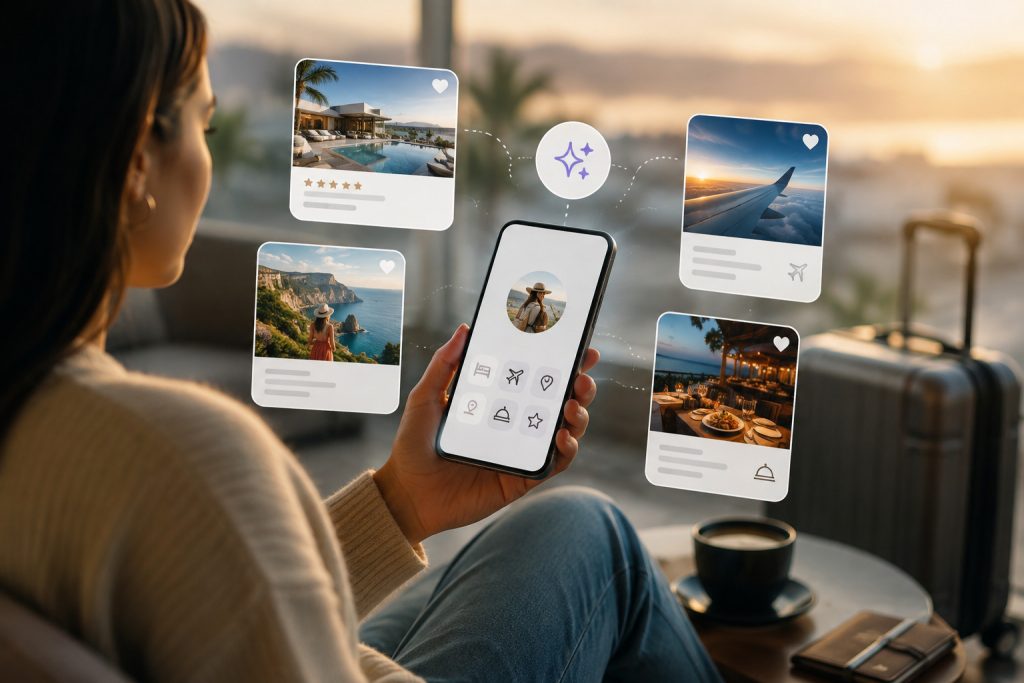
An AI tool for personalized travel recommendations pulls together loyalty status, past stays, and search patterns to surface the right room, upgrade, or destination. Booking.com and Airbnb already use machine learning models to personalize search results and property suggestions based on traveler behavior and past choices. A guest who booked a spa package last trip gets wellness offers next time. A frequent business traveler gets workspace and transfer suggestions instead.
Under the hood, moving from simple LLM wrappers to true agentic workflows requires decoupling business logic from the model layer. This means integrating deterministic API gateways, low-latency vector search over historical guest telemetry, and hard state-machine guardrails that ensure agents only execute approved transactions within strict system boundaries.
Conversational AI in Travel and Hospitality
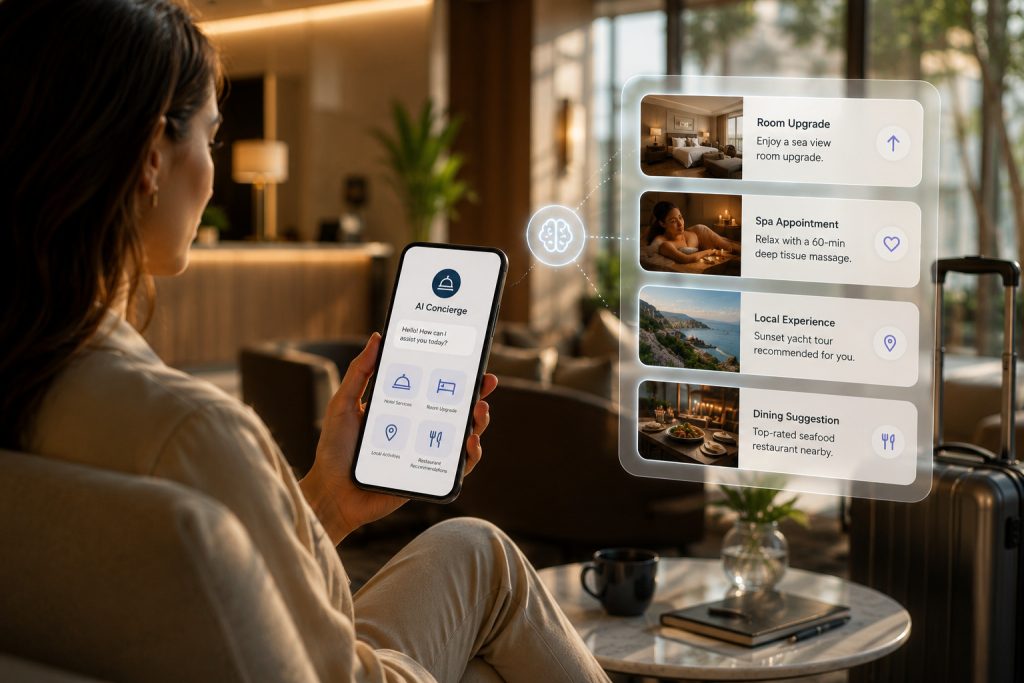
Conversational AI in travel and hospitality now covers far more than basic chatbots. Delta Air Lines, for instance, introduced an AI concierge that gives travelers personalized guidance, from passport expiry reminders to weather-based packing suggestions. These assistants free up human staff to focus on complex, high-empathy situations instead of routine queries.
Dynamic, Real-Time Revenue Management
Hospitality AI news in 2026 keeps circling back to one theme: pricing that reacts instantly. Hilton uses AI-driven demand forecasting and revenue management tools to adjust pricing and availability across its properties. When a local event spikes demand, agentic pricing systems adjust room or ticket rates instantly instead of waiting for a manual review cycle.
Predictive Operations and Maintenance
Behind every seamless guest experience sits a mountain of operational planning. AI models forecast occupancy weeks, flag equipment likely to fail, and optimize housekeeping schedules around check-out patterns. This keeps staffing lean without hurting service quality.
Contactless and In-Room Personalization
A Hilton study found that 63% of travelers prefer digital keys over queuing at reception, which explains why hotels are pairing digital keys with voice-activated in-room assistants that control lighting, temperature, and service requests based on a guest’s history.
Personalized Loyalty and Retention
Points-based loyalty is losing relevance. AI now tailors rewards to context. A traveler landing after a delayed flight might get an automatic lounge pass or early check-in instead of a generic tier discount. Small, well-timed gestures build stronger retention than blanket perks ever did.
Generative AI in Travel vs Agentic AI: Know the Difference
Generative AI in travel and Generative AI in hospitality work like a high-level advisor. They answer questions, draft itineraries, and suggest options, but a human still makes the final call. Agentic AI goes several steps further. It has the authority to act: rebook a flight, adjust a hotel reservation, and notify the guest, all without a person approving each step.
This distinction matters for anyone budgeting an AI roadmap. Generative tools are lower-risk and faster to deploy. Agentic systems deliver more automation but need stronger governance before going live.
Implementation: What to Do and What to Avoid
Rolling out AI in travel and tourism without a plan leads to wasted budget and guest trust issues. Keep it simple.
Do this:
- Clean and unify your CRM and booking engine data before layering AI on top.
- Keep a human-in-the-loop for high-stakes actions like large refunds or full rebookings.
- Make sure your AI system can explain its decisions to guests and staff.
Avoid this:
- Giving AI agents full autonomy without guardrails; unchecked systems can misfire on brand-sensitive decisions.
- Ignoring data privacy laws while handling sensitive guest information.
- Launching too many AI initiatives at once. Two or three high-value use cases beat ten vague ones.
The Road Ahead: Agentic AI at Scale
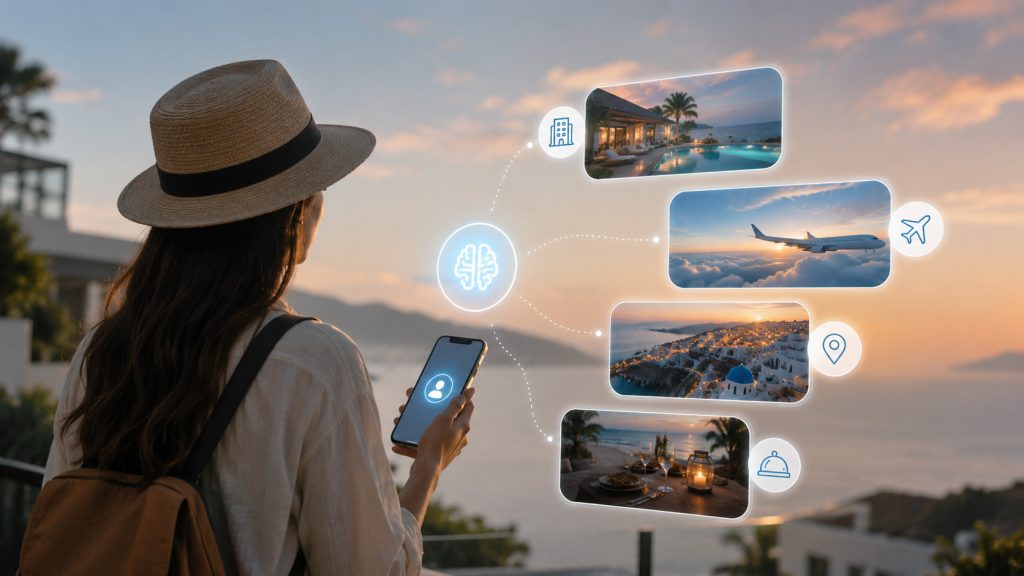
The next phase of AI in tourism is autonomous coordination. Picture a traveler whose flight gets delayed. An AI agent detects the delay, rebooks the next available flight, shifts the hotel reservation, arranges an airport transfer, and messages the traveler, all before the traveler even opens their app. That is the practical difference between a recommendation engine and a true agent.
Businesses that get there first won’t win because they had access to better models. They’ll win because they combined agent-first architecture with human-in-the-loop checkpoints, something that engineering teams built on rigorous software practices, including the kind coming out of Ahmedabad’s growing tech ecosystem, are increasingly positioned to deliver.
Ready to bring hyper-personalized, agent-first AI into your travel or hospitality business? VectovateAI builds custom AI agents and automation systems designed around human-in-the-loop control, so you get the speed of agentic AI without losing oversight where it matters most. Get in touch to scope your first use case.
Frequently Asked Questions.
Get all your answers here and if something remains ask our AI concierge or Book a call with our consultant.