AI in the Fitness Industry: The Future of Smart, Adaptive Workouts
The AI fitness market is on track to grow from USD 10.68 billion in 2025 to USD 57.80 billion by 2035. From real-time form correction to churn prediction for gyms, here is where AI is delivering real value today and what founders should prioritize when building an AI-first fitness product.

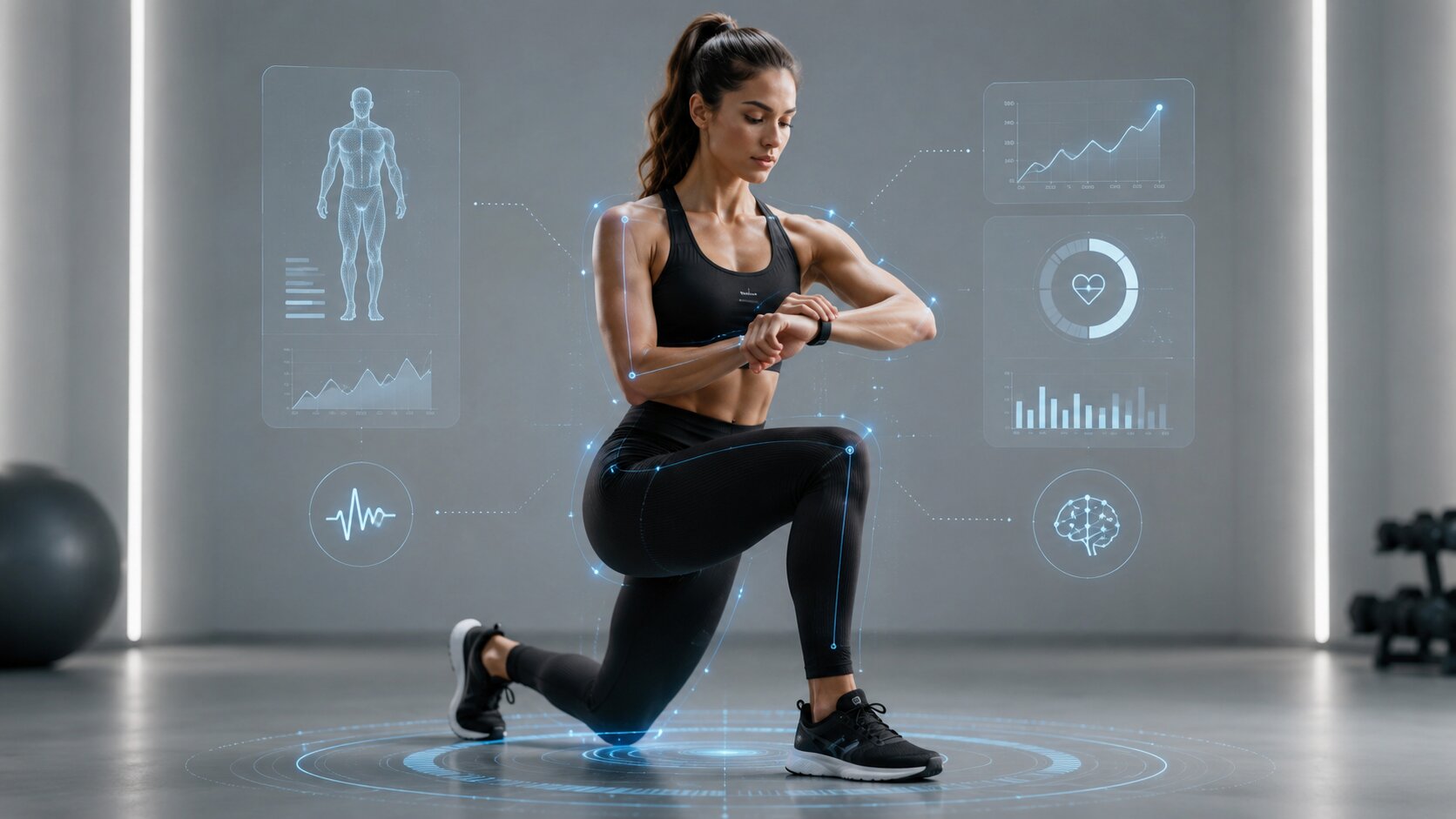
Five years ago, “smart” fitness meant a watch that counted your steps. Today, it means an app that watches your squat form through your phone camera, flags a rounding lower back before it becomes an injury, and rewrites your entire training week because you slept four hours instead of eight.
That shift didn’t happen by accident. AI in the fitness industry has moved from a marketing buzzword to the actual infrastructure behind personal training, gym operations, and nutrition coaching. For business owners, gym chains, and app founders watching this space, the question isn’t “should we adopt AI” anymore. It’s “how fast can we build it before a competitor does?”
This blog breaks down what’s actually happening, backed by real market data, so you can make an informed call.
Key Takeaways
- The global AI in fitness industry is valued at USD 10.68 billion in 2025 and is projected to hit USD 57.80 billion by 2035, growing at a 19.3% CAGR — one of the fastest-growing niches in health tech.
- AI-enabled fitness apps currently lead the market, ahead of wearables, smart gym equipment, and virtual trainers.
- AI in fitness apps now goes beyond step-counting — think real-time form correction, injury prevention, and adaptive workout plans that change as your body changes.
- North America leads adoption today, but corporate wellness and digital health platforms are pushing rapid growth across Asia-Pacific too.
- The winners in this space won’t be “AI-only” apps. They’ll be human in the loop platforms where AI handles the data and trainers handle the relationship.
Why Is AI in Fitness Growing So Fast?
The numbers tell the story better than any hype cycle could. The global AI in fitness and wellness market was valued at USD 10.68 billion in 2025 and is expected to touch USD 57.80 billion by 2035, growing at a compound annual rate of 19.3%.
That growth isn’t coming from one source. It’s a combination of:
- Rising personalization demand: users no longer want generic 4-week plans; they want plans that adapt weekly.
- Wearable technology maturing: smartwatches and trackers now feed continuous health data into AI models.
- Corporate wellness programs: As per InsightAce Analytics, companies in North America are increasingly deploying AI in health and fitness initiatives to cut healthcare costs and boost employee productivity.
- Post-pandemic digital fitness habits: people who moved to app-based training during COVID never fully went back, and AI made staying digital worth it.
Market Breakdown at a Glance
| Segment Type | Examples | Market Position |
|---|---|---|
| AI-Enabled Fitness Apps | Personalized coaching, nutrition tracking | Leading segment by revenue share |
| AI-Integrated Wearables | Smartwatches, fitness bands | Strong secondary growth driver |
| Virtual Personal Trainers | AI-powered coaching platforms | Fastest-growing category |
| Smart Gym Equipment | AI-connected machines | Emerging, gym-chain focused |
If you’re a founder or decision-maker scoping an AI integration in fitness app project, this table matters. It tells you where the money and the user demand are actually concentrated. Apps still win. Hardware is a slower, capital-heavier bet.
Where AI Is Actually Being Used Today?
Let’s move past the market-report language and get practical. Here’s where AI in fitness apps is delivering real value right now.
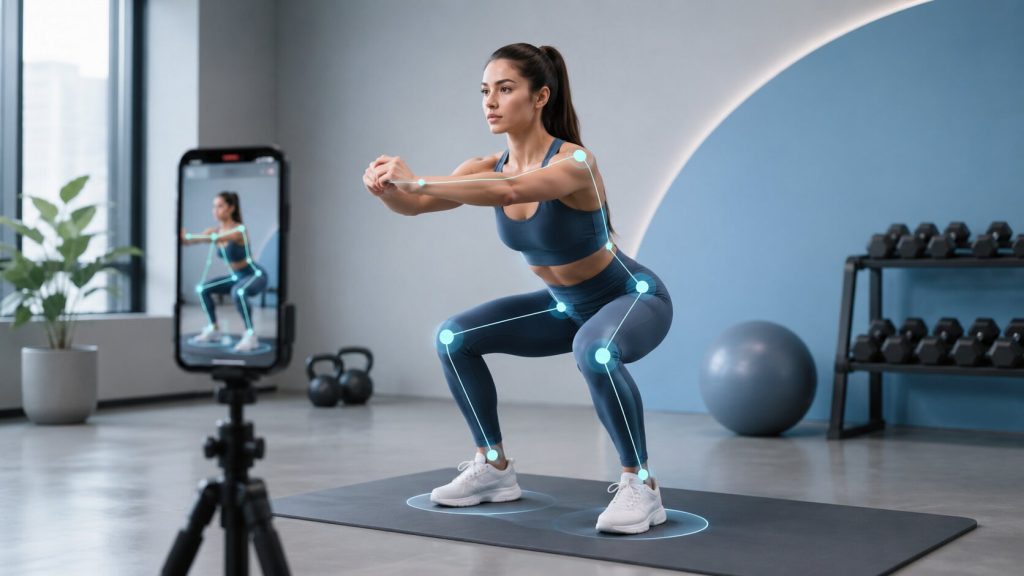
1. Real-Time Form Correction and Injury Prevention
This is arguably the most impactful use case for everyday users. Computer-vision-based apps can now analyze a user’s movement through a phone camera and flag poor form in real time: a rounded back during a deadlift, a caving knee during a squat.
Research backs this up: studies on AI exercise-coaching apps have shown measurable improvement in posture correction for movements like the squat and plank, even accounting for variation in individual body types. This isn’t a gimmick. It’s genuinely reducing injury risk for people training without a trainer physically present.
2. Adaptive, Data-Driven Workout Plans
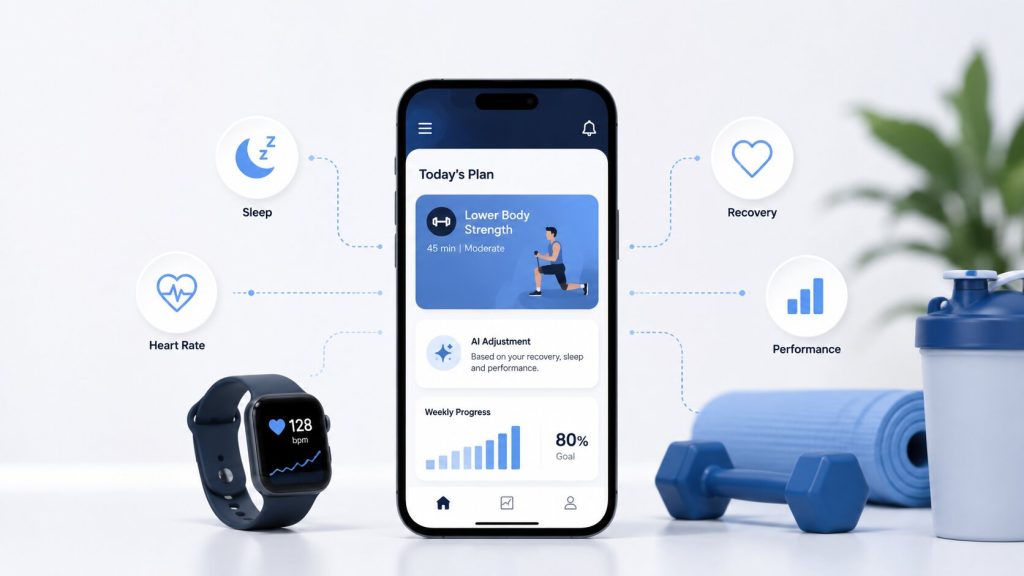
The core promise of AI in fitness is adaptability. Instead of a static 8-week PDF plan, AI systems continuously analyze:
- Sleep quality and recovery scores
- Workout completion and consistency
- Heart-rate variability and exertion levels
- Stated goals versus actual progress
And, adjust the next session accordingly. This is the difference between a plan and a system that responds to you.
3. Smart Nutrition and Meal Planning
Nutrition tracking tools now do more than log calories. Platforms are using AI to recommend meals based on dietary preferences, flag nutrient deficiencies, and suggest swaps that fit a user’s goals, pulling from massive restaurant and grocery databases to make logging nearly frictionless.
4. Business-Side AI for Gyms and Trainers
This is the part most consumer articles skip, and the part business owners actually care about. AI isn’t just client-facing. It’s quietly reshaping fitness businesses from the back end:
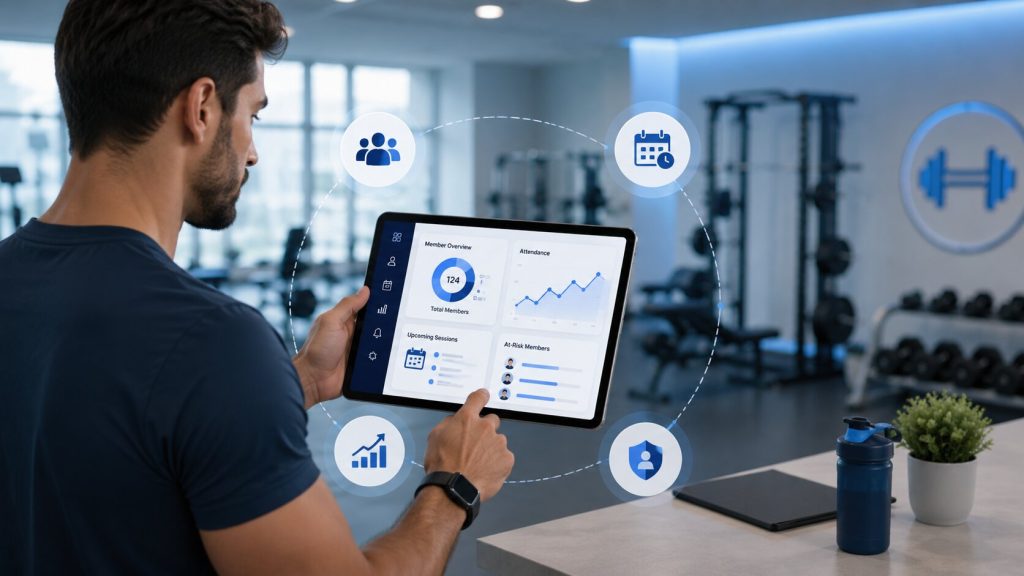
- Churn prediction: identifying clients likely to cancel or ghost sessions before it happens, so trainers can intervene early.
- Automated scheduling and reminders: cutting admin time significantly.
- AI-assisted marketing and content: generating first-draft blog posts, social captions, and outreach copy so trainers spend more time coaching and less time on a laptop.
For gym owners and fitness-tech founders, this is where AI fitness industry transformation 2025 actually shows up on the P&L, not just in the app store.
AI Trends in Fitness Industry: What’s Coming Next
The AI trends in fitness industry for the next few years point toward three clear directions.
1. Agentic, Autonomous Coaching
Instead of static recommendations, expect AI “agents” that take action on your behalf, auto-adjusting your training calendar, rebooking a missed session, or negotiating rest days based on recovery data, without you opening the app.
2. Wearable-to-Clinical Convergence
Wearables are increasingly feeding data into healthcare-adjacent use cases — early injury detection, chronic condition monitoring, and post-rehab tracking — blurring the line between fitness apps and digital health tools.
3. Hyper-Personalization at Scale
As machine learning models get better at processing multi-variable data (sleep, stress, nutrition, training load), personalization moves from “customized templates” to genuinely unique programs per user, updated in near real time.
Future of AI in the Fitness Industry: What It Means for Jobs
This is the question every trainer, coach, and fitness professional actually asks, and it deserves a direct answer: AI is not replacing trainers.
What AI does replace is the repetitive, data-heavy parts of the job: logging workouts, tracking macros, generating basic program templates. What it cannot replace is the human relationship: motivation, accountability, reading a client’s mood, and adjusting coaching style on the fly.
For fitness professionals, this means the future of AI in the fitness industry (jobs) looks less like displacement and more like augmentation: trainers who use AI tools well will out-earn and out-scale trainers who don’t. For IT students and developers eyeing this space, it means opportunity: the fitness industry needs people who can build these AI layers, not just people who can train clients.
Building an AI-First Fitness Product? What to Prioritize
If you’re a business owner or founder evaluating AI integration in fitness app development, here’s a simple prioritization framework:
- Start with data infrastructure, not features. Your AI is only as good as the data pipeline feeding it. Wearable integrations, workout logs, and user feedback loops need to be solid first.
- Design for human-in-the-loop, not human-out-of-the-loop. The strongest products pair AI recommendations with human trainer oversight, especially for injury-prone movements.
- Prioritize retention features over acquisition gimmicks. Churn prediction and personalized re-engagement have a higher ROI than flashy onboarding.
- Build for privacy from day one. Health data is sensitive, and privacy and security concerns are a documented barrier to AI adoption in this market.
Frequently Asked Questions.
Get all your answers here and if something remains ask our AI concierge or Book a call with our consultant.