AI in Retail: Personalized Shopping and Smart Inventory
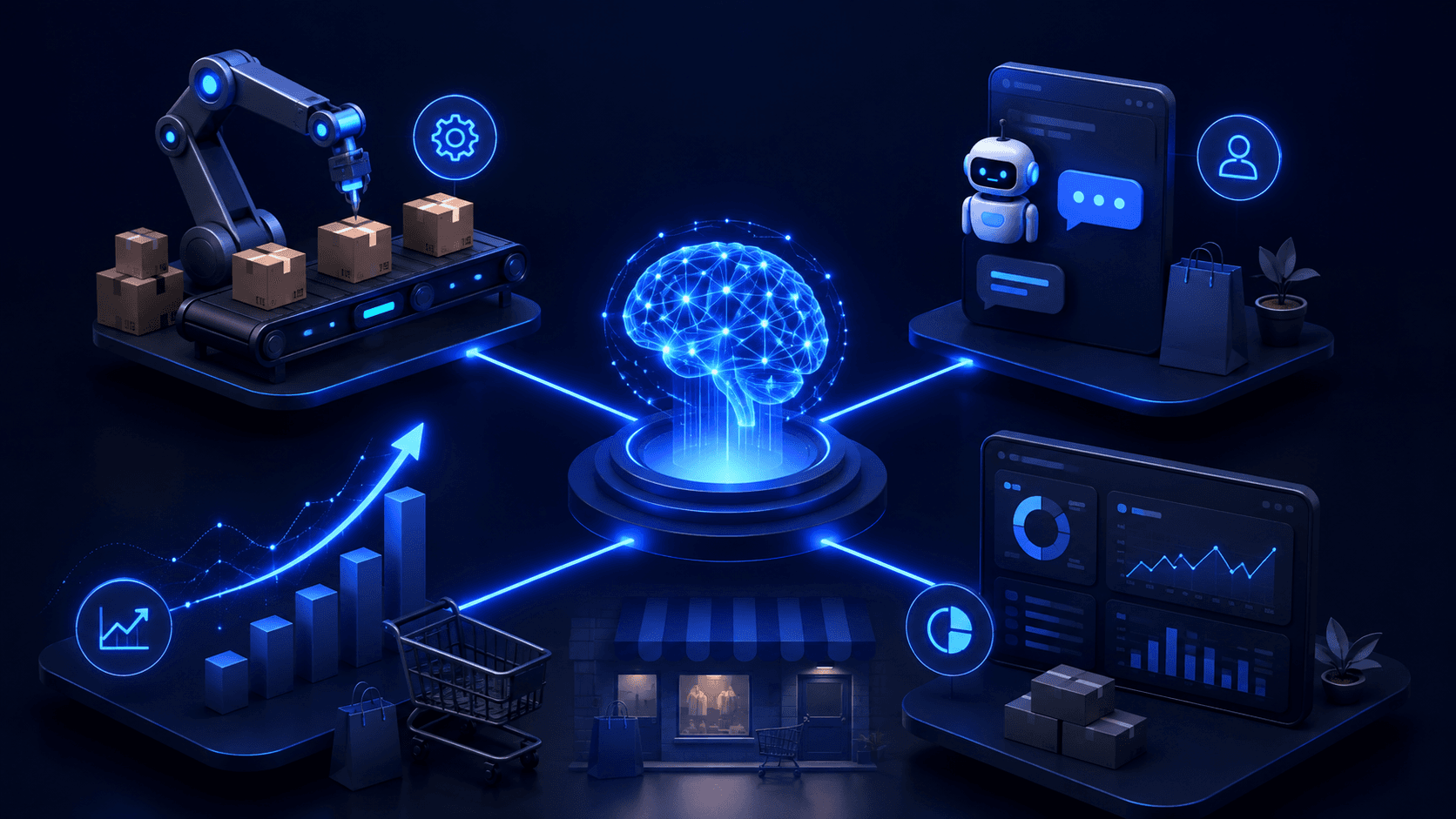
AI in retail is turning guesswork into precision. Here is how personalized shopping, AI inventory management, and retail automation work in 2026.

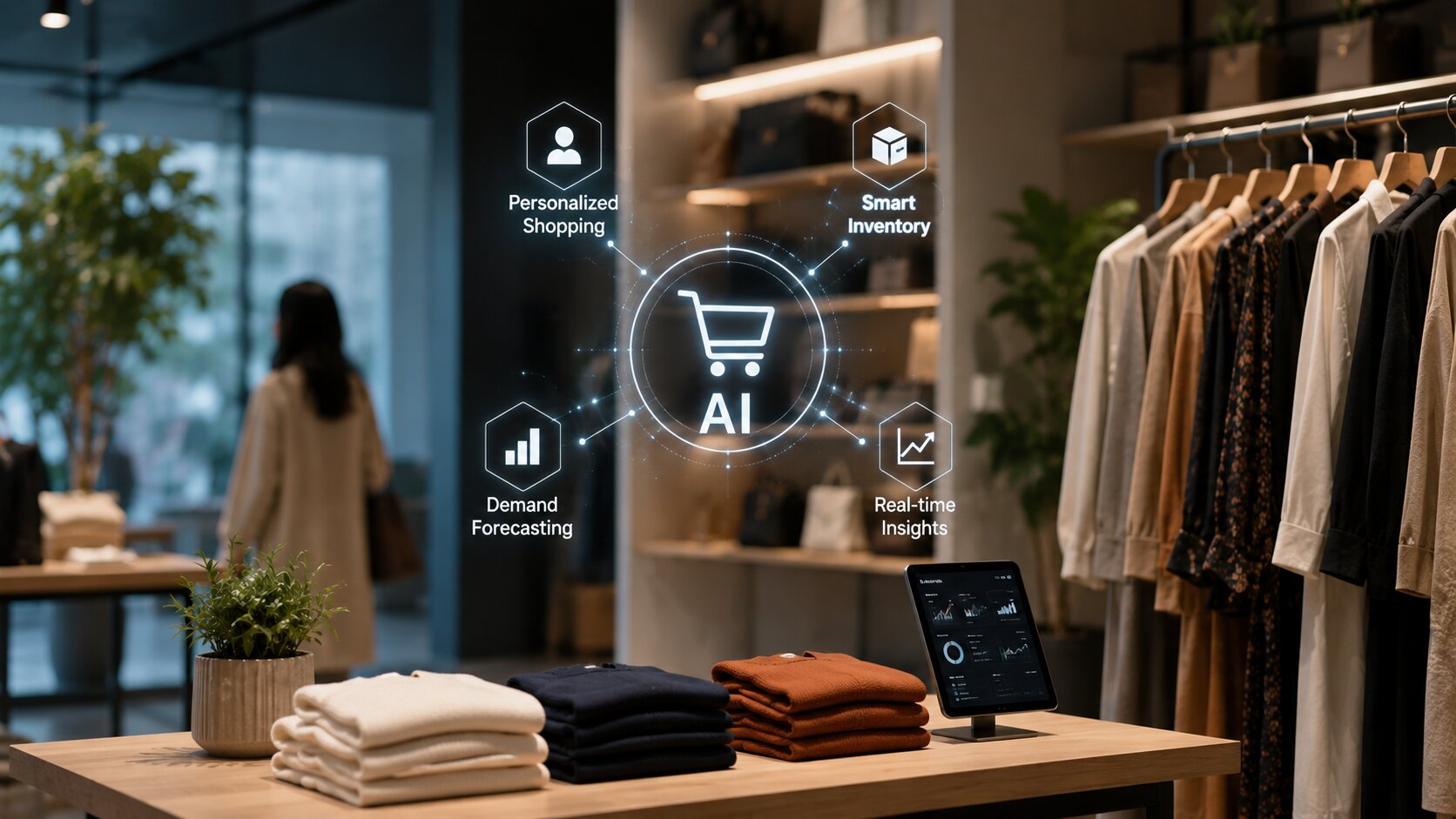
Shopping has changed. Customers no longer walk into a store and browse blindly. They expect stores to know them, remember them, and guide them.
Picture this. A shopper opens an app, and it already knows her size, her style, and what she looked at last week. She never sees an out-of-stock message, because the store restocked before she even searched. This is happening right now, in stores that got AI right.
AI in retail is the technology making this possible. It is turning guesswork into precision, and generic shopping into something personal.
From personalized product suggestions to smart stock management, retailers are rebuilding their entire operations around AI. The ones who move first are pulling ahead fast, and the ones who wait are losing customers to competitors who already made the shift.
This blog breaks down how AI in retail industry works today, why AI inventory management matters, and how businesses can use AI retail solutions to grow revenue while cutting waste.
Key Takeaways
- AI in retail helps businesses predict demand, personalize shopping, and reduce stockouts in real time.
- Generative AI in retail is moving beyond chatbots into product descriptions, visual search, and dynamic pricing.
- AI inventory management systems can cut overstock and understock situations by analyzing sales patterns across stores and warehouses.
- Retail automation AI reduces fraud, speeds up checkout, and frees staff for higher-value customer interactions.
- Retailers with full AI integration report far stronger sales and profit outcomes than those still testing pilots.
- The winning approach in 2026 is agent-first and human-in-the-loop with full automation.
Why Is AI in Retail No Longer Optional?
Retail runs on thin margins. General retailers typically operate on margins close to 2.5%, and grocery margins are often even lower. The industry tends to generate small profit margins, around 2.5% for general retailers, with grocery store margins even lower. That leaves almost no room for guesswork in pricing, stocking, or staffing.
This is exactly where AI in retail earns its place. It removes the guesswork from decisions that used to rely on gut feeling instead of just automating tasks.
Retailers are also facing constant disruption from shifting global trade rules. In April 2025 alone, governments worldwide introduced more than 470 new trade restrictions, according to the Swiss-based think tank Global Trade Alert. AI helps retailers react to this kind of volatility fast by re-routing supply chains and reallocating stock before a shortage hits the shelf.
The payoff is measurable. According to a recent IHL Group survey, retailers who have fully integrated AI report more than double the sales and profit compared to retailers still early in adoption.
AI in Personalized Shopping
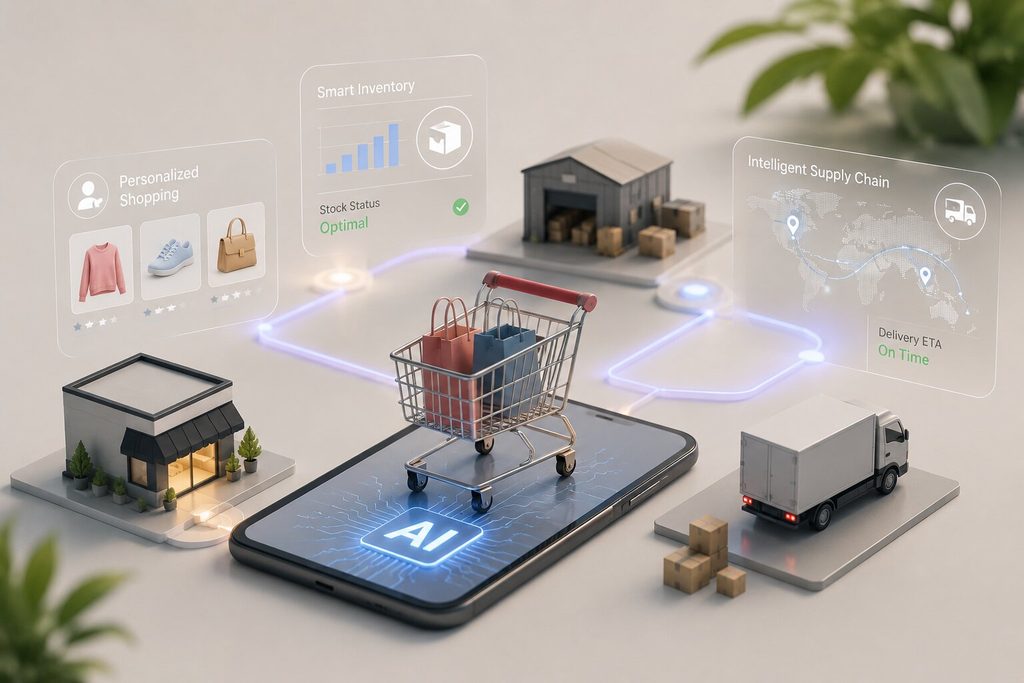
Customers expect every retailer to know their preferences instantly. This is the core promise of AI in personalized shopping.
Personalized Shopping Cart Suggestions AI
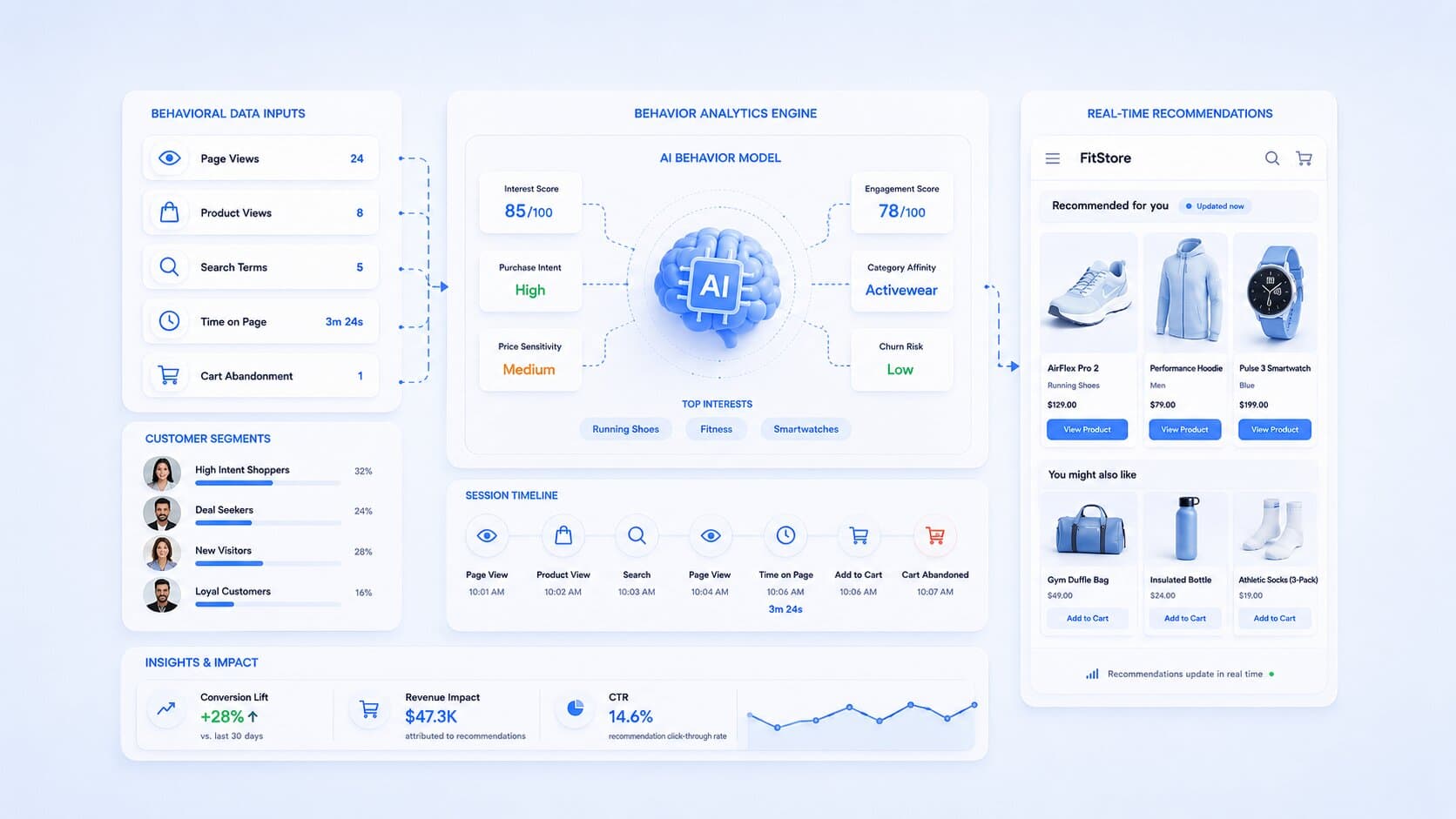
Modern retail platforms use personalized shopping cart suggestions AI to recommend items based on browsing history, past purchases, and even seasonal context. A customer buying children’s sneakers, for example, may later see suggestions for kids’ socks, not adult accessories, because the system understands the buying pattern behind the purchase.
AI Personal Shopping Assistant
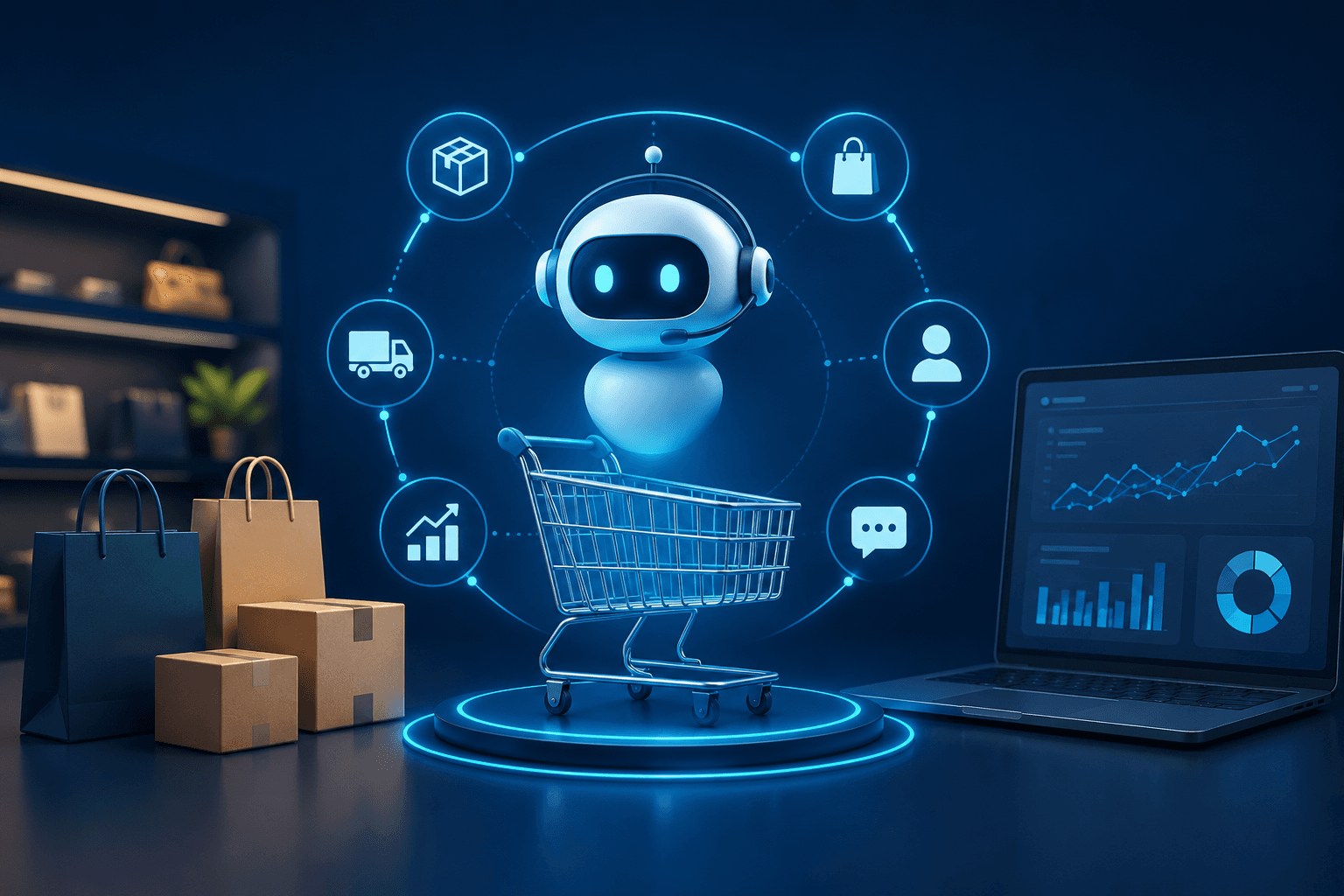
An AI personal shopping assistant goes further than recommendations. It holds a conversation. A shopper looking for a jacket can describe where and how they plan to wear it, and the assistant narrows down options accordingly. A clothing retailer uses AI-powered chatbots to provide more relevant recommendations to customers online or on the phone by engaging them in a conversation about where and how they plan to wear a new coat.
Conversational AI in Retail
Conversational AI in retail powers voice search, in-app assistants, and customer support that resolves queries without waiting for a human agent. This matters because personalization has become an expectation. Research shows that 71% of consumers prefer personalized experiences.
Retailers who deliver this well win loyalty. Retailers who get it wrong risk feeling intrusive. Personalized experiences that rely on data customers didn’t realize was being tracked can feel invasive rather than helpful, which is why data governance now matters as much as the AI model itself.
AI Inventory Management: Solving the Oldest Retail Problem
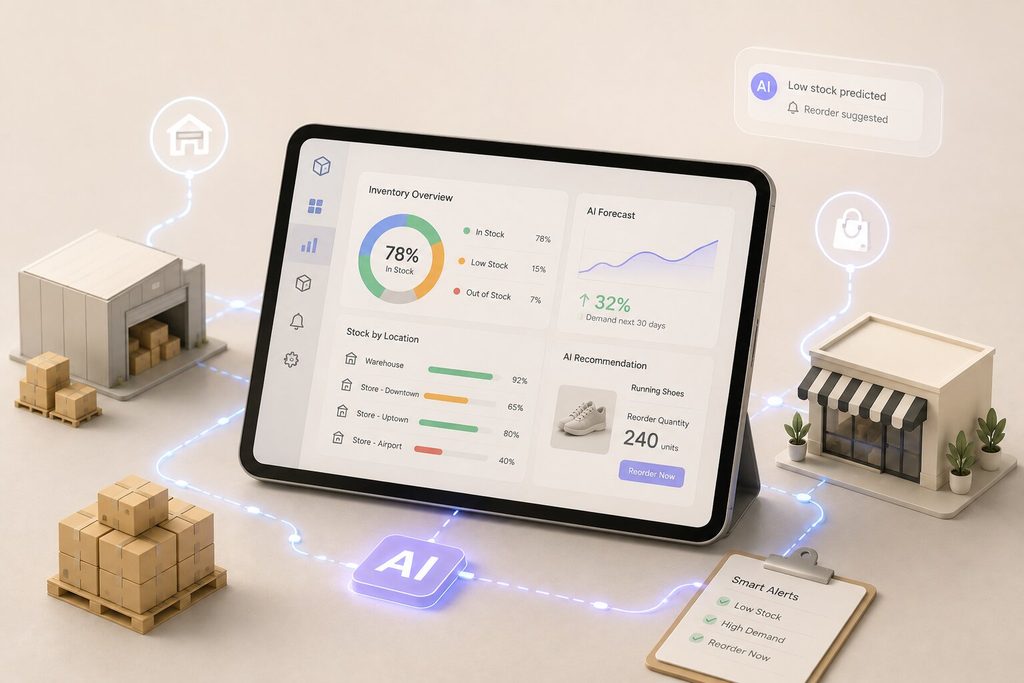
Stockouts frustrate customers. Overstock eats into margins. AI for inventory management solves both problems by giving retailers a live view of what is selling, what is sitting, and what needs restocking.
AI gives retailers a real-time view of inventory across stores and warehouses, tracking what’s selling, what’s sitting, and what needs to be restocked. This directly reduces the markdowns caused by excess stock and the frustration caused by empty shelves.
| Inventory Challenge | Traditional Approach | AI Inventory Management Approach |
|---|---|---|
| Demand forecasting | Manual, based on past sales only | Factors in weather, events, social trends, and historical data |
| Perishable stock rotation | Fixed schedules | Real-time shelf reshuffling based on freshness data |
| Multi-store visibility | Delayed, siloed reports | Live, unified view across stores and warehouses |
| Shrinkage detection | Manual audits | Real-time anomaly detection at point of sale |
Shrinkage is another area where AI inventory management delivers direct savings. US retailers lose more than $110 billion a year to shrinkage, according to the National Retail Federation, caused by shoplifting, vendor fraud, employee theft, and other non-sales reasons. AI systems, paired with sensors at checkout, can flag mismatches between scanned items and actual items in real time, cutting these losses significantly.
Generative AI in Retail: Beyond Chatbots
Generative AI in retail has moved past simple customer support scripts. It now touches product content, visual search, and personalized marketing copy at scale.
Here are the most practical generative AI use cases in retail today:
- Product description automation. AI reads long manufacturer specs and rewrites them into short, customer-friendly descriptions.
- Visual search. Shoppers upload a photo of an outfit they liked, and the AI finds similar items in the catalog.
- Dynamic marketing copy. Generative AI drafts personalized emails and promotions based on individual purchase history.
- Synthetic demand scenarios. Retailers simulate “what if” pricing or stocking scenarios before committing a budget.
Generative AI can read and summarize entire manuals in minutes, a task that would take hours or days for humans. Applied to retail catalogs, this means thousands of product pages can be optimized in days instead of months.
AI in Retail Supply Chain
Supply chains have become the most fragile part of retail operations. AI in retail supply chain management addresses this by predicting disruptions before they hit inventory.
AI can:
- Forecast demand spikes using weather, local events, and historical sales patterns together.
- Reroute shipments dynamically when a supplier faces delays or new trade restrictions apply.
- Match orders to the nearest fulfillment center, cutting delivery time and shipping cost.
- Flag supplier risk early, before a stockout becomes visible on the shelf.
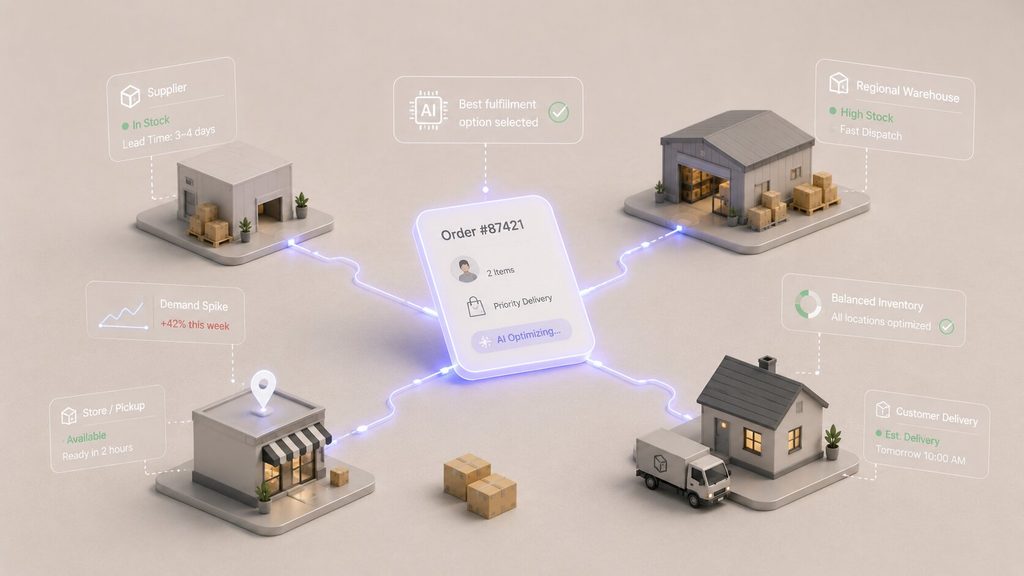
AI can dynamically assign orders to fulfillment centers based on proximity, inventory availability, and shipping constraints, reducing delivery times and costs while meeting rising customer expectations for speed.
Retail Automation AI: What It Actually Automates
Retail automation AI is often misunderstood as “robots replacing staff.” In practice, it automates the repetitive parts of retail so people can focus on customers.
| Function | What AI Automates |
|---|---|
| Checkout | Frictionless scanning, fraud pattern detection |
| Staffing | Demand-based schedule generation |
| Pricing | Competitor price tracking and dynamic adjustment |
| Merchandising | Shelf layout suggestions based on foot traffic data |
AI systems can monitor and analyze transaction patterns in real time, flagging unusual behavior that may indicate fraud, whether it’s a sudden surge in high-value purchases or mismatched shipping and billing addresses. This reduces chargebacks for the retailer and builds a safer checkout experience for the customer.
Choosing the Right AI Retail Solutions
Not every AI retail solutions provider fits every business. Before choosing a partner, retailers should evaluate:
- Data readiness. AI cannot personalize what it cannot see. Fragmented, siloed data breaks the entire system.
- Human-in-the-loop design. Fully autonomous pricing or inventory decisions carry risk. The best systems keep a human checkpoint on high-impact calls.
- Omnichannel integration. A recommendation engine that only works online, and not in-store, creates a broken customer journey.
- Governance and transparency. Customers should never feel surveilled. Clear data policies build trust, not just compliance.
This is where an agent-first, human-in-the-loop approach outperforms fully automated black-box systems. AI should recommend and predict. People should still own the final call on pricing, promotions, and customer-facing decisions.
If you are evaluating a partner who builds AI retail systems this way, Vectovate AI designs agent-first, human-in-the-loop AI retail solutions built for exactly this kind of real-world deployment.
Final Thoughts
AI in retail is already reshaping how stores forecast demand, personalize shopping, and manage stock. Retailers that treat AI as a plug-in tool will fall behind. Retailers that rebuild their operations around it, from AI inventory management to conversational AI in retail, are the ones pulling ahead on both revenue and customer loyalty.
The technology is ready, are you? The real advantage now belongs to teams that pair strong AI systems with human judgment, and to engineering partners who can build that balance correctly from day one, like we do here at VectovateAI. Book a strategy call with our AI architects.
Frequently Asked Questions.
Get all your answers here and if something remains ask our AI concierge or Book a call with our consultant.