AI in Education: Intelligent Learning Platforms
Adaptive learning platforms adjust pace and difficulty per student in real time. Here is how AI in education actually works, and what it still cannot replace.

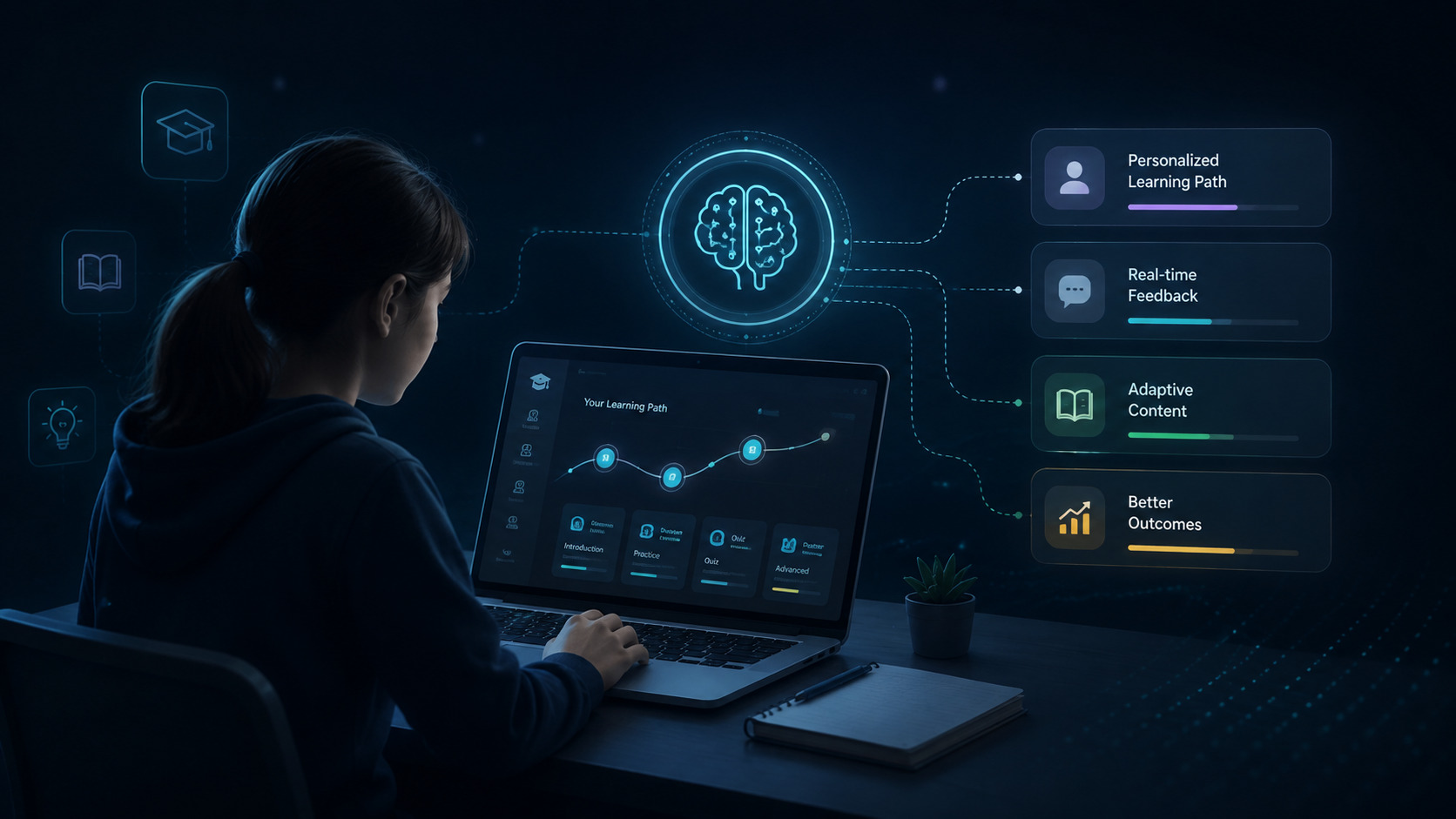
What if your child’s textbook could think? Not just display information, but actually notice when they’re stuck, slow down, and explain it differently until it clicks. That future isn’t years away. It’s already inside thousands of classrooms right now.
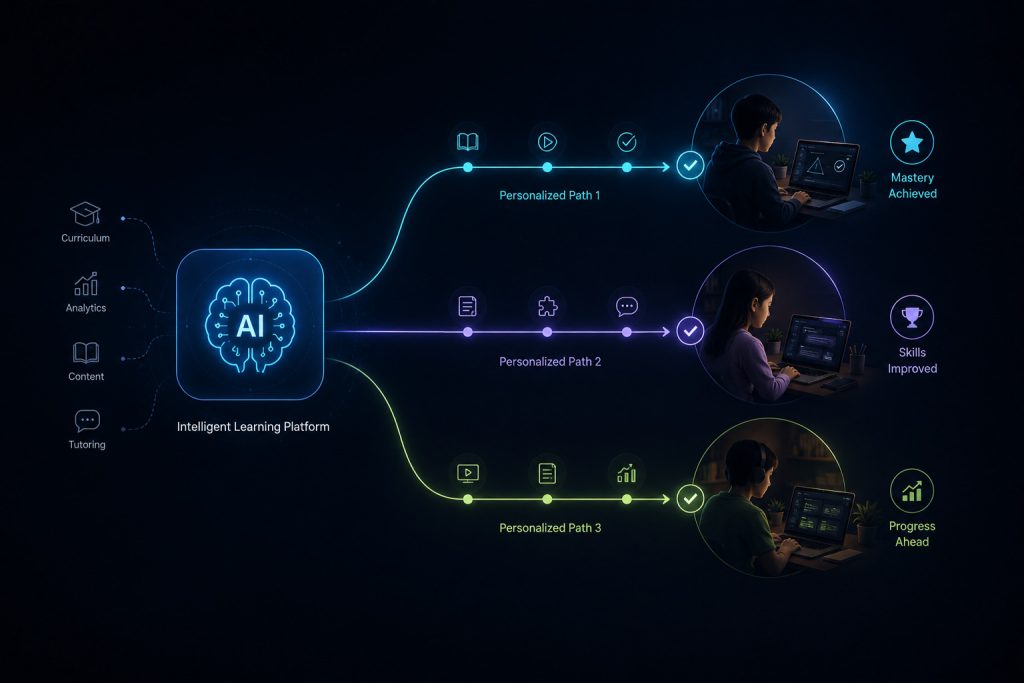
AI in education has stopped being a buzzword and started being infrastructure. It is quietly rewriting how students learn, how teachers teach, and how institutions track real progress instead of guesswork. Walk into a K-12 classroom or a corporate training room today, and you’ll see the same shift: one-size-fits-all lessons are dying. In their place, intelligent platforms build learning paths shaped around one person’s pace, strengths, and blind spots. In this blog, you’ll learn what adaptive learning means, how an AI powered learning platform works, and where this technology is going in 2026 and beyond.
Key Takeaways
- Adaptive learning uses AI algorithms to adjust content, pace, and difficulty based on real-time student performance.
- Benefits of AI in education include personalized instruction, instant feedback, reduced teacher workload, and better data-driven decisions.
- AI in higher education is streamlining research, grading, and student support at scale.
- AI in special education is enabling truly individualized support for learners with different needs.
- Generative AI in education now creates custom quizzes, lesson plans, and study material in seconds.
- Institutions must balance automation with human interaction to keep learning empathetic and effective.
What is Adaptive Learning?
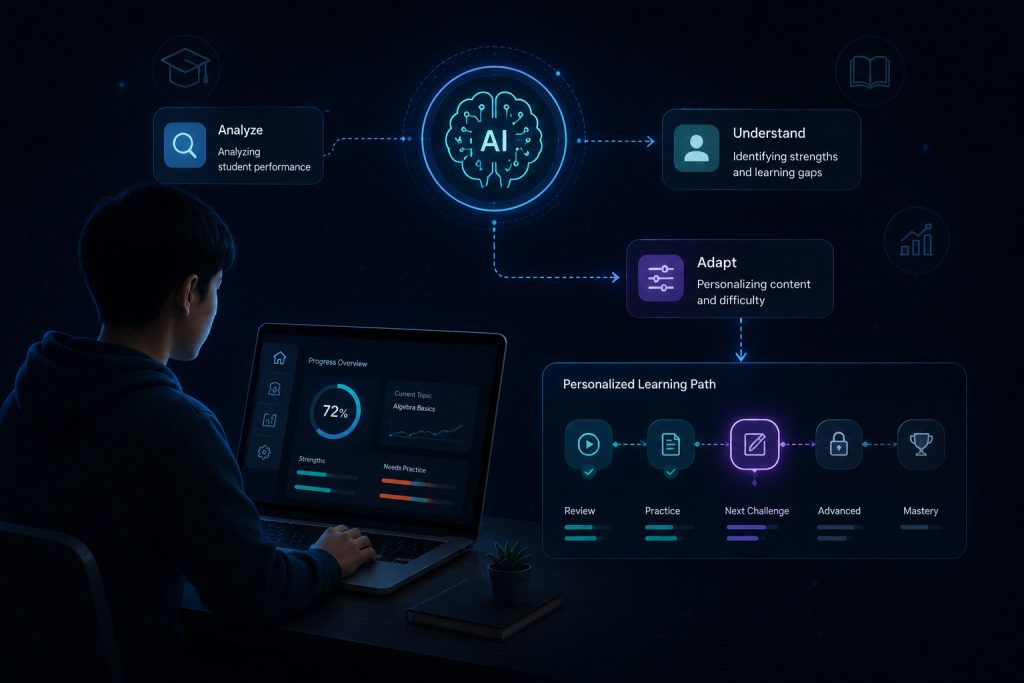
What is adaptive learning in simple terms? It is a teaching method where software constantly studies how a student is performing and changes the lesson accordingly. If a student struggles with fractions, the system slows down and offers extra practice. If a student masters a topic quickly, it moves them ahead instead of holding them back.
Adaptive learning platforms typically rely on four building blocks: a domain model that stores the subject knowledge, a student model that tracks individual progress, a tutoring model that decides teaching strategy, and an interface that engagingly delivers content. Together, these components let the system respond to a learner almost like a private tutor would, based on how intelligent tutoring systems analyze a student’s current knowledge, learning pace, and preferred learning style, then adjust difficulty and offer targeted feedback.
How AI-Powered Learning Platforms Actually Work
An AI powered learning platform combines several technologies working together in the background.
| Component | What It Does | Example Use |
|---|---|---|
| Adaptive engine | Adjusts pace and difficulty in real time | Math practice that gets harder as skill improves |
| Predictive analytics | Flags students at risk of falling behind | Alerts for teachers before a student fails |
| Natural Language Processing | Reads and evaluates written responses | Automated essay and grammar feedback |
| Content recommendation | Suggests the next best resource | Video or article suggestions based on interest |
| Conversational AI tutor | Answers doubts instantly | 24/7 chatbot support for homework questions |
This structure is similar to what platforms like DreamBox and Knewton use, where the system continuously evaluates student performance and adjusts difficulty level and content style based on an algorithm. The result is a classroom that feels personal, even when hundreds of students are learning at once.
Benefits of AI in Education
The benefits of AI in education go well beyond convenience. Schools, universities, and training teams are seeing measurable gains.
- Personalized learning paths: Every student gets content matched to their level, instead of a generic textbook chapter.
- Instant feedback: Mistakes get corrected in real time instead of days later.
- Reduced teacher workload: Grading, attendance, and admin tasks get automated, freeing teachers for actual mentoring.
- Better data insights: Institutions can spot learning gaps early using performance analytics.
- Scalability: One well-built platform can support thousands of learners simultaneously without losing quality.
- Increased engagement: Interactive quizzes, gamification, and instant progress tracking keep students motivated.
Industry data backs this shift too. We recently helped an educational provider boost student retention by 60% and lift teacher-student engagement by 80% by modernizing their legacy platform with gamified interactions and automated LMS workflows . Additionally, a recent Hostinger blog found that over 40% of business leaders report increased productivity after implementing AI automation. A trend that mirrors what schools are experiencing with automated grading and content creation.
AI in Higher Education
AI in higher education is solving a different set of problems than K-12. University students juggle heavier workloads, independent research, and career planning, and AI tools are stepping in at every stage.
Universities are using AI to give students instant assistance with assignments, projects, and coursework, while automating administrative tasks like grading and progress tracking so instructors can focus on meaningful interactions. Beyond the classroom, AI research assistants now help students summarize papers, find relevant citations, and organize literature reviews far faster than manual methods.
For working professionals returning to study, adaptive platforms also personalize schedules around existing commitments, making higher education more accessible to non-traditional students juggling jobs and families.
AI Tutoring and Generative AI in Education
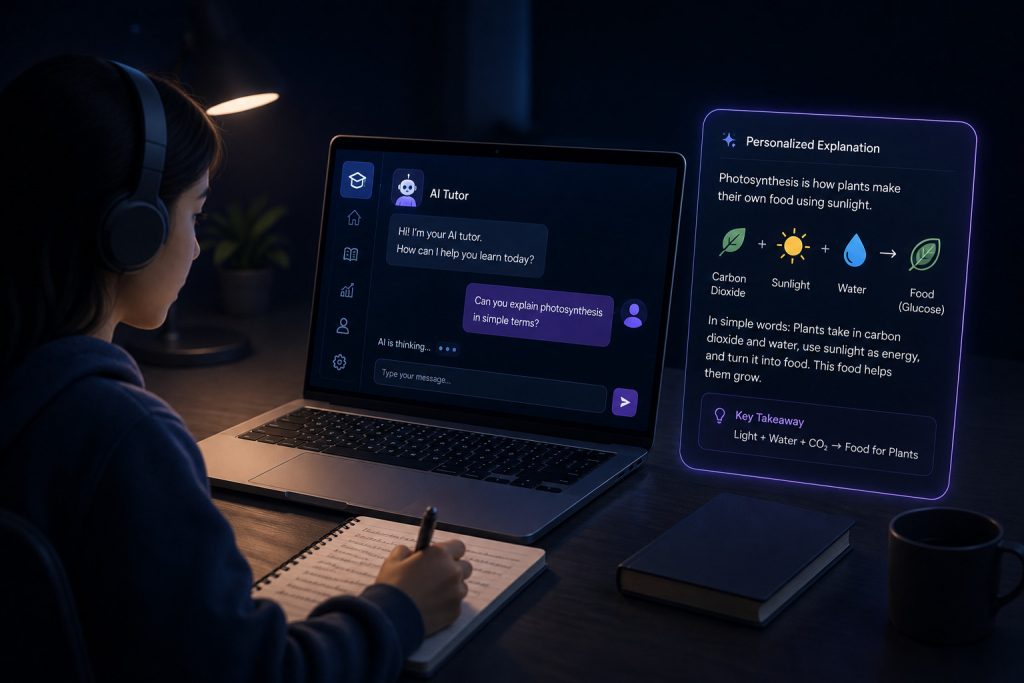
AI tutoring has moved past simple flashcard apps. Modern systems hold conversations, explain concepts in multiple ways, and adjust tone based on a student’s confidence level. A student who seems frustrated gets simpler explanations and encouragement. A student who is confident gets challenged with harder problems.
Generative AI in education takes this further by creating brand new content on demand. Teachers can generate a full quiz from a single topic, translate lesson material into another language in seconds, or build practice questions targeted at a specific weak area. This shift is already visible across platforms that let educators transform documents into structured courses using AI and automatically generate multiple-choice questions in multiple languages.
For institutions, this means lesson planning that once took hours can now take minutes, without sacrificing quality.
AI in Special Education
AI in special education is one of the most meaningful applications of this technology. Every learner with a different need, whether it is dyslexia, ADHD, autism, or a physical disability, requires a different pace and format of instruction. Traditional classrooms struggle to give this level of individual attention consistently.
AI tools help by:
- Converting text to speech and speech to text for learners with reading or writing difficulties.
- Breaking lessons into smaller, less overwhelming steps for students with attention challenges.
- Tracking micro-progress so therapists and special educators can adjust support plans quickly.
- Offering sensory-friendly interfaces that reduce distraction for neurodivergent learners.
This is where adaptive learning technology genuinely changes outcomes, since the system does not force every student through the same rigid path.
Adaptive Learning Platforms in 2026: What’s Changing
AI in education adaptive learning platforms 2026 are moving from simple content recommendation toward something closer to an always-on learning companion. The bigger shift this year is a move from AI as a content generator to AI as an active guide inside the learning process itself, helping with search, coaching, and skill mapping in one continuous experience rather than separate tools bolted together.
Some notable directions shaping adaptive learning news this year:
- Conversational search inside LMS platforms, where students ask questions in plain language instead of browsing menus.
- Skill-based learning paths that map directly to career outcomes.
- AI coaching layers that evaluate a learner’s answers and explain concepts before a human reviews the work.
- Multilingual content generation, making it easier for regional institutions to localize learning material quickly.
These developments show adaptive learning platforms evolving from passive tools into active partners in the learning journey.
Challenges of AI in Education
No transformation comes without friction, and AI in education is no exception.
- Cost of development: Building a robust adaptive system requires significant investment, and developing intelligent tutoring systems is costly and resource-intensive.
- Data privacy: Student data protection needs strict compliance with regulations, since institutions handle sensitive information at scale.
- Risk of over-reliance: Too much automation can reduce valuable face-to-face interaction between students and teachers.
- Bias in algorithms: Systems trained on limited data sets can unintentionally disadvantage certain student groups.
- Teacher readiness: Many educators need proper training before they can use AI tools confidently in the classroom.
Balancing automation with human judgment remains the real challenge for schools and universities adopting these tools.
AI in Education Conference: Where the Industry is Talking
For educators and edtech leaders who want to stay current, AI in education conferences worldwide now dedicate entire tracks to adaptive learning, ethical AI use, and classroom integration strategies.
These events bring together researchers, platform builders, and school administrators to discuss what is actually working on the ground, instead of something that sounds good in a pitch deck. Attending or following these conversations helps institutions make informed decisions before investing in a platform.
Final Thoughts
AI in education works best when it supports teachers instead of replacing them. The strongest AI powered learning platform combines adaptive technology with a human touch, using data to personalize learning while keeping mentorship, empathy, and real classroom connection at the center. As adaptive learning technology matures through 2026, institutions that get this balance right will see the biggest gains in student outcomes, engagement, and long-term retention.
If you’re exploring how adaptive learning technology can fit into your institution or product roadmap, the team at VectovateAI can help you plan the right approach.
Frequently Asked Questions.
Get all your answers here and if something remains ask our AI concierge or Book a call with our consultant.