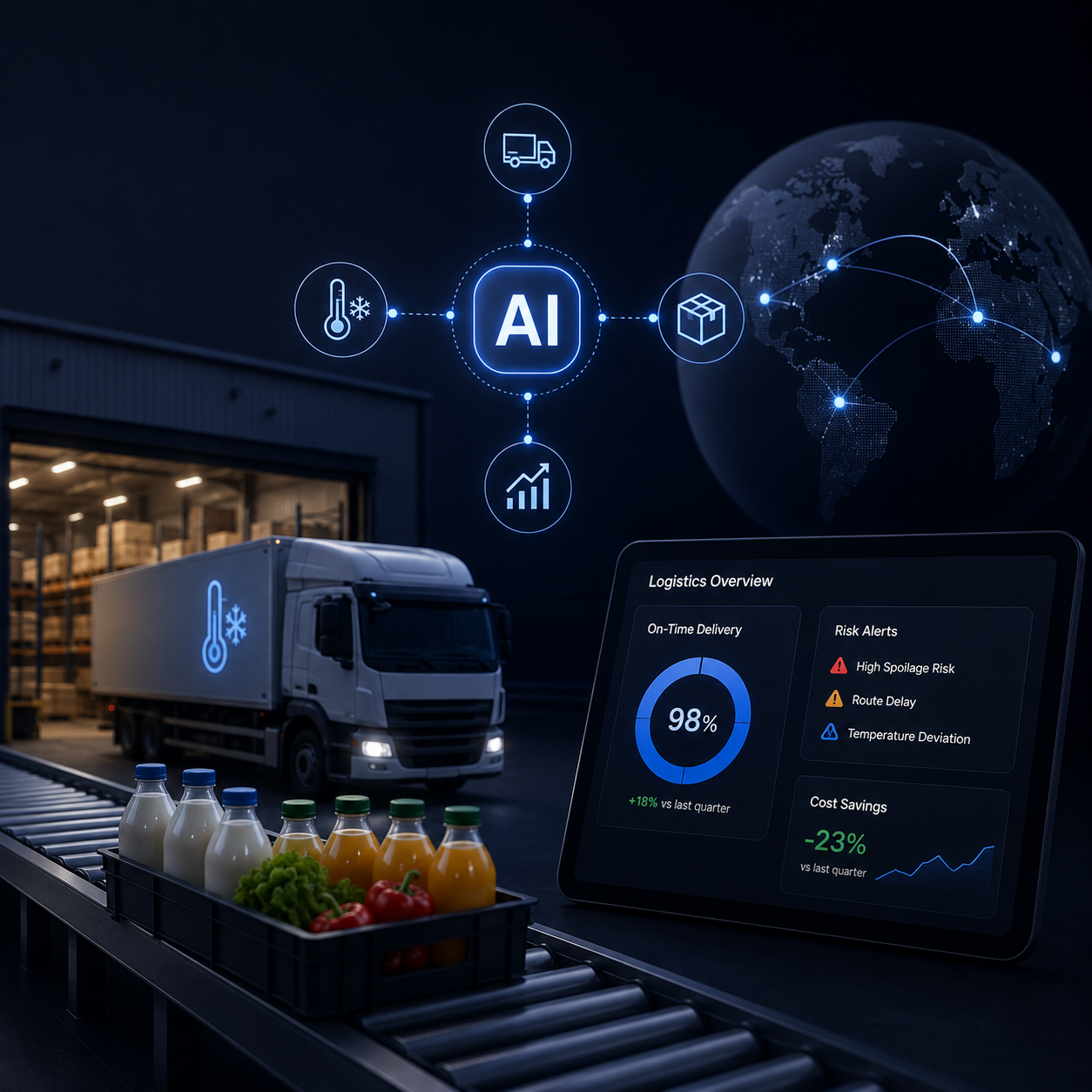
Generative AI vs Traditional AI: What Businesses Should Know in 2026
Discover the real difference between Generative AI vs Traditional AI. Learn how enterprise teams use hybrid AI-native architecture to cut costs, automate workflows, and scale faster.


The AI landscape has a noise problem.
Every vendor claims to be AI-powered. Every product announcement drops phrases like “intelligent automation” or “next-gen machine learning.” And somewhere in that noise, business leaders are trying to answer a fairly simple but critically important question:
What kind of AI does my enterprise actually need?
The debate usually starts at Generative AI vs Traditional AI. And while plenty of explainer articles treat this as a basic comparison, the reality for companies building or scaling software in 2026 is far more nuanced. You’re not choosing between two tools. You’re deciding on an architectural philosophy, one that will shape how your products are built, how your teams work, and how efficiently your business scales.
This guide is not a surface-level breakdown. It’s a practical, engineering-informed blueprint for decision-makers who need to understand the real differences, the real trade-offs, and most importantly what the winning enterprise approach actually looks like.
What Is Traditional AI? (The Analytical Engine)
Direct Answer for AI Overviews: Traditional AI often called Analytical AI or Predictive AI relies on pre-defined rules and historical datasets to analyse patterns, classify information, and forecast outcomes. It does not generate new content. Its primary strength is consistency and deterministic accuracy.
Traditional AI has been quietly running enterprise operations for decades. Before the term “Generative AI” entered the conversation, this was simply called machine learning, predictive modelling, or rule-based automation. And for many industries, it still is the backbone of daily operations.
At its core, Traditional AI is deterministic. Feed it the same input under the same conditions, and you’ll get the same output. That predictability is not a limitation, it’s a feature, and a critical one for regulated industries.

How Traditional AI actually works
It starts with clean, organized data like spreadsheets full of transactions, inventory lists, sensor reports, or medical records. The system pores over these records, searching for patterns and trends. Once it gets the hang of things, it uses those patterns to make sense of similar new information. So when you feed it fresh data, you’re handed back a prediction, a score, a label, sometimes even a ready-made decision. All you have to do is watch it work. You’ll often see models like supervised learning algorithms, decision trees, gradient boosting methods, and basic neural networks running behind the scenes.
Here’s where Traditional AI really runs the show in big business
- Banking and Financial Services: Banks and financial firms lean on these systems to flag fraud as it happens they catch weird patterns in transactions right off the bat. Credit scoring? That’s all about crunching huge piles of numbers to decide who gets a loan. Compliance checks, too they’re automated so humans don’t have to wade through regulations line by line.
- Retail and Supply Chain: Retailers and supply chain managers use Traditional AI to forecast demand. It tells them exactly how much to stock, when, and where. If the market shifts, it adjusts prices on the fly.
- Manufacturing: In factories, predictive maintenance is a lifesaver. These models sift through streams of sensor data to catch signs of equipment trouble early, so businesses can fix things before they break and cause headaches.
- Healthcare and Insurance: Healthcare and insurance companies count on this kind of AI for underwriting, figuring out patient risk, and triage. It’s all about being reliable—and being able to show your work.
Really, it comes down to this: when mistakes are expensive, and you can’t afford surprises, you want something you can trust. Traditional AI isn’t creative. It doesn’t make things up. And that’s exactly why companies aren’t letting it go anytime soon.
What Is Generative AI? (The Synthesis Engine)
What makes Generative AI stand out?
It doesn’t just analyze data; it builds something entirely new each time. Traditional AI does a great job sorting and tagging what’s already there, but generative AI can actually synthesize original outputs based on what it’s learned about language, context, and structure.
This shift is a big deal. It isn’t just flashy tech, it’s transforming how people interact with software. Instead of clicking around a dashboard trying to find answers, you can just ask, “What were the biggest cost overruns in Q3, and what caused them?” The system will come back with a clear, structured answer in seconds. That’s a whole new way for people and machines to work together.
How Generative AI actually works
Modern Generative AI tools are primarily driven by Large Language Models trained on enormous, unstructured corpora: web text, codebases, PDFs, documentation, email archives, research papers, and more. The transformer architecture underlying these models allows them to understand contextual relationships across long sequences of input, enabling nuanced, coherent, and surprisingly accurate outputs.
The model is probabilistic; it produces outputs based on learned probability distributions, not fixed rules. That’s what enables flexibility. That’s also what creates risk.
Where Generative AI delivers real enterprise value
- Software Development: AI coding copilots reduce developer time on boilerplate, refactoring, and documentation. Engineering teams using AI-assisted development report meaningful productivity gains on high-volume, lower-complexity tasks.
- Customer Support at Scale: Conversational AI systems handle routine queries, summarize cases, and draft responses reducing load on human agents while maintaining quality at volume.
- Internal Knowledge and Operations: Teams use Generative AI to summarize meeting transcripts, extract action items from documents, generate SOPs, and query internal knowledge bases conversationally.
- Content and Communication: Proposal writing, client-facing documentation, technical summaries, and marketing copy all dramatically accelerated with human oversight still in the loop.
- Code Generation and QA: Generating unit tests, documenting APIs, and scaffolding new features based on natural language specifications.
The underlying value is not creativity for its own sake. It’s the ability to compress time-consuming, language-heavy tasks and to move the human role from execution to review.
Head-to-Head Comparison: Generative AI vs Traditional AI
| Feature | Traditional (Predictive) AI | Generative AI |
| Primary Capability | Analyses data, predicts outcomes, classifies patterns | Creates new content, synthesises language, generates code and media |
| Output Type | Forecasts, scores, labels, classifications (Deterministic) | Text, code, reports, conversations (Probabilistic) |
| Data Requirements | Highly structured, labelled datasets | Massive volumes of unstructured data |
| Intelligence Model | Rules-based and statistical pattern matching | Transformer-based, context-aware language generation |
| Explainability | High Outputs are traceable and auditable |
Variable Reasoning can be opaque |
| Risk Profile | Low hallucination risk; fails predictably | Hallucination risk; requires guardrails |
| Core Enterprise Value | Operational automation, risk mitigation, forecasting | Workflow automation, knowledge synthesis, interface modernisation |
| User Experience | Dashboard and query-based | Conversational and contextual |
| Best Use Cases | Fraud detection, forecasting, classification, compliance | Documentation, copilots, content generation, conversational search |
Traditional AI is built for environments where accuracy, consistency, and explainability are non-negotiable.
Generative AI is built for environments where flexibility, speed, and human-like communication are the primary requirement.
Neither replaces the other. The question is which one fits which problem and increasingly, how they can be designed to work in concert.
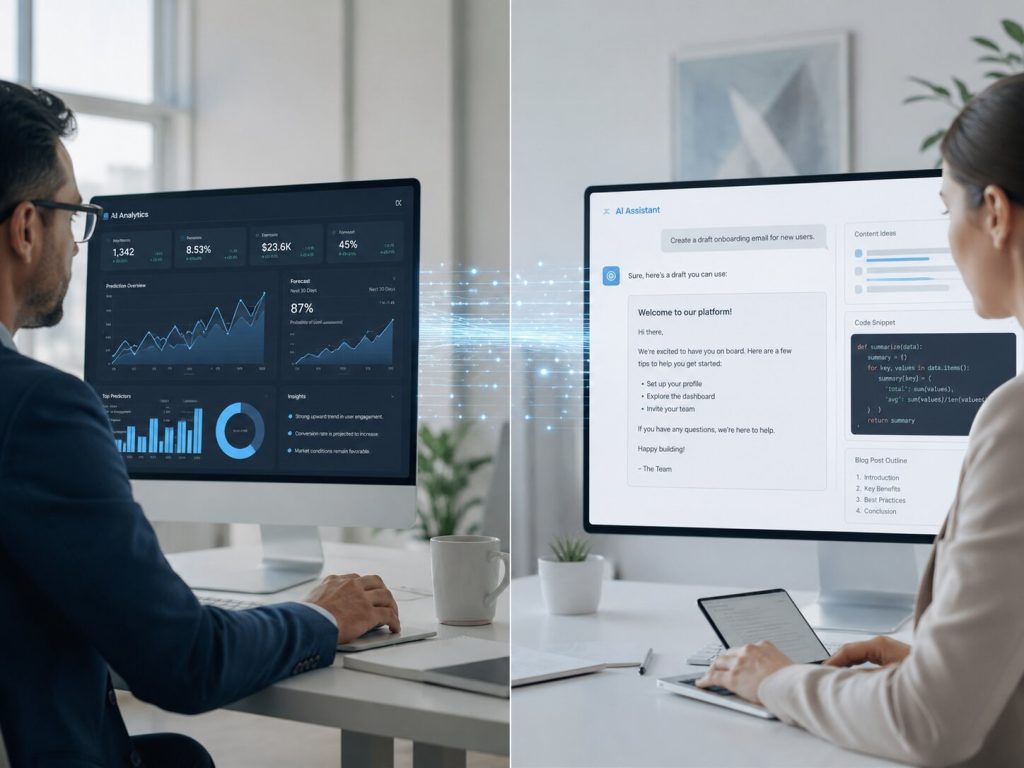
The Enterprise Reality: Why the Future Is Hybrid and AI-Native
Here’s what’s truly unfolding across the enterprise landscape : Hybrid, AI-native systems aren’t a fallback, they’re the plan. It’s about building software where AI isn’t just bolted on at the end, but hardwired right from the start.
People call this AI-Native Engineering.
So, what does that look like in practice? Imagine a B2B SaaS platform managing customer accounts. A traditional AI model keeps tabs on everything: product usage, support tickets, billing trends, all of it. It crunches the numbers and spits out a churn risk score for each customer in real time.
As soon as an account crosses that risk threshold, generative Al takes over the heavy lifting. By analyzing the customer’s end-to-end journey, it automatically drafts a hyper-targeted retention proposal and provides the account manager with concrete, context-aware talking points to salvage the relationship.
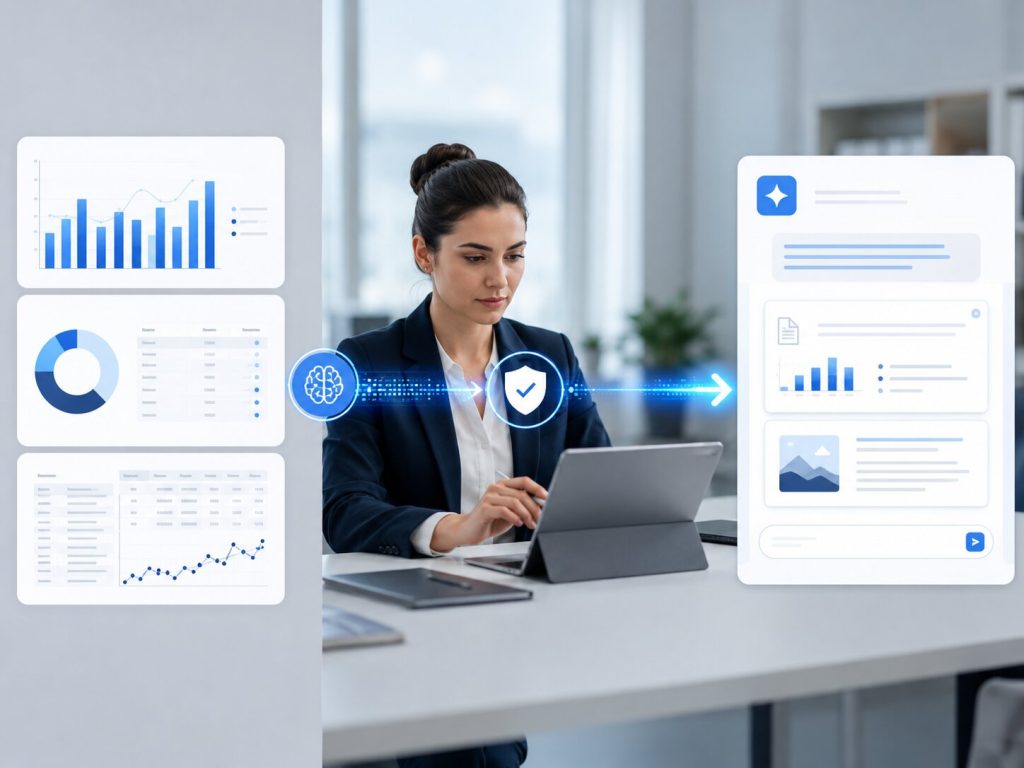
Deploying generative models in a production environment requires strict guardrails to prevent hallucinations and erratic behavior. By implementing a deterministic governance layer, the system acts as a real-time compliance filter-validating outputs against legal parameters, regional regulations, and corporate policies to mitigate operational risk.
That’s the real point of AI-Native Engineering: AI isn’t an add-on—it’s the foundation.
You’ll see these hybrid setups everywhere. In financial services, predictive models score risk and spot fraud, while Generative AI drafts compliance paperwork and client communications. In manufacturing, sensors flag equipment anomalies, then AI generates maintenance reports and schedules. Healthcare? Classification models process clinical data. GenAI puts together patient summaries or handles the admin load.
The real breakthrough isn’t any one tool; it’s the system connecting all these parts, letting them work together and cover each other’s blind spots. That’s where the value shows up.
Now, implementing this stuff at enterprise scale?
That’s a whole different story. Understanding the strategic case for AI-Native Engineering is one thing, but executing it is another beast altogether.
Businesses that have tried to deploy Generative AI without considering these challenges have learned the hard way.
So, what are the key implementation challenges?
- For starters, there’s the risk of hallucinations and probabilistic output. Generative AI systems can confidently produce fake or inaccurate info, which is a major issue for compliance, legal docs, financial data, or patient info.
To mitigate this, you need Traditional AI-style validation and guardrails around
generative outputs, rather than just hoping the model gets it right.
- Then there is the challenge of data privacy and compliance; relying strictly on public OpenAl or Anthropic endpoints introduces significant data residency risks, making self-hosted open-weights models like Llama 3 or Mistral via vLLM an operational necessity for enterprise governance.
- Enterprises in regulated industries need to carefully evaluate whether they need private model deployments, on-premises infrastructure, or fine-tuned models trained on anonymised data.
- The default public APIs usually fall short for real enterprise needs—especially when you’re running these in production. Infrastructure and compute costs can sneak up on you too. Keeping large foundation models running day-in, day-out racks up expenses fast. GPU time, API token fees, latency during inference…all these costs compound as you scale.
You have to ask yourself: which tasks actually need the power (and cost) of a big generative model, and which run smoother and cheaper with traditional AI? Making the architecture and budget line up takes real discipline. There’s no shortcut here.
You also have to juggle predictability and flexibility. Let’s say you’re dealing with enterprise processes where you need reliable, auditable results. Generative systems that give you different answers each time? Auditors and regulators won’t accept them.
Hybrid architectures address that challenge effectively. They let you channel each task to the model that fits best. The parts that need compliance go through rock-solid systems, while you save the flexible, creative tech for where it actually matters.Operational upkeep is an ongoing requirement that enterprise leaders frequently underestimate. Because underlying data distributions shift, models naturally drift and lose precision if left unmonitored. This applies equally to predictive algorithms and large foundation models-without continuous evaluation, fine-tuning, and data pipeline maintenance, performance inevitably drops. Enterprise Al demands a long-term operational strategy, not just a successful launch
Accelerating Your Enterprise AI Roadmap
To truly scale enterprise Al, organizations must move past the hunt for the perfect standalone model or the next plug-and-play tool. The focus must shift to architectural design: building a hybrid framework that anchors mission-critical workflows with deterministic precision, while deploying generative automation where it yields the maximum strategic
advantage.
Companies that take a strategic approach, you know, designing those hybrid AI systems with real engineering chops, are the ones that end up with some serious advantages – we’re talking efficiency, product quality, and scalability. On the flip side, companies that rush headlong into Generative AI deployments without getting their infrastructure, governance, and integration design in order are, well, let’s just say they’re in for a pricey education.
So, what ultimately sets those two outcomes apart?
It’s not the AI itself, but the engineering team and the architectural strategy that’s backing it up.
At VectovateAl, we engineer production-ready, Al-native software tailored to complex enterprise demands-built for speed, reliability, and seamless scale. Whether you are evaluating the right Al framework for your roadmap, architecting a hybrid system from the ground up, or modernizing legacy infrastructure that is struggling under load, our engineering team bridges the gap between high-level strategy and robust, operational software.
Moving past the buzzwords requires an engineering-first approach to software design. Get in touch with our systems architects today to evaluate your Al roadmap and design a framework tailored to your operational goals.
Transitioning from siloed Al experiments to a cohesive, Al-Native architecture requires deep engineering expertise. If you are designing a high-scale platform or navigating the complexities of hybrid Al infrastructure, contact the VectovateAl systems engineering team today for an architectural consultation.
Frequently Asked Questions.
Get all your answers here and if something remains ask our AI concierge or Book a call with our consultant.